Where in the bible is there a verse that tells of fallen angels being cast into the Euphrates?

Yesua888

Well-known member
Joined
Nov 15, 2025
Messages
814
Reaction score
731
Points
93
Q ONE:
Where in the bible is there a verse that tells of demons or fallen angels being cast in the Euphrates?

The verse that mentions four angels (interpreted by many as fallen angels or demons) being bound at the Euphrates River is Revelation 9:14.

The text commands the sixth trumpet angel to "Release the four angels who are bound at the great river Euphrates" (ESV). These angels were prepared to kill a third of humanity and lead an army of 200 million mounted troops (Revelation 9:15–16).

Another related verse, Revelation 16:12, describes the Euphrates River drying up to prepare the way for the "kings from the East," which some interpret as connected to the same eschatological events involving demonic forces or eastern armies

Q TWO:
What happens when the 7th angel trumps?

When the seventh angel blows his trumpet (Revelation 11:15–19), several things happen:

Heavenly proclamation – Loud voices in heaven declare: "The kingdom of the world has become the kingdom of our Lord and of his Christ, and he shall reign forever and ever" (v. 15).
Heavenly worship – The twenty-four elders fall on their faces and worship God, acknowledging that He has taken His great power and begun to reign (vv. 16–17).
Judgment and reward – They declare it is time to reward the saints and prophets, and to destroy those who destroy the earth (v. 18).
The heavenly temple opens – The temple of God in heaven is opened, and within it the ark of His covenant is revealed (v. 19).
Cosmic disturbances – Lightning, thunder, an earthquake, and great hail strike (v. 19).
Many interpreters also note that the seventh trumpet encompasses the entire sequence of events in chapters 12–20, including the seven bowl judgments (chapter 16), the battle of Armageddon, the return of Christ, and the establishment of His eternal kingdom. In other words, the seventh trumpet doesn't bring a single new plague — it announces the culmination of all judgment and the dawn of God's eternal reign.

Q THREE:
why were the 4 angels bound in the Euphrates in the first instance?
 
The passage you're looking for is Revelation 9:14-16, but I think there's something important we need to clear up. The Bible tells us that four angels were bound at the Euphrates River, but it does not specifically say they were fallen angels or demons, nor does it say they were cast into the river.

Revelation 9:14 says, "Saying to the sixth angel which had the trumpet, Loose the four angels which are bound in the great river Euphrates."

Then verse 15 tells us, "And the four angels were loosed, which were prepared for an hour, and a day, and a month, and a year, for to slay the third part of men."

Now, why were these angels bound in the first place? That's a good question, but Scripture doesn't tell us when they were bound, how they were bound, or why they were originally placed there. We know they were being held until the appointed time when God would allow them to carry out this judgment.

Some believe they must be fallen angels because they were bound, and that's certainly something worth examining. Jude 6 and 2 Peter 2:4 speak of angels who sinned and were kept in bonds or chains awaiting judgment. But neither passage identifies those angels as the four at the Euphrates. We shouldn't automatically assume they're the same.

As for the seventh trumpet, Revelation 11:15-19 tells us exactly what happens. Heaven announces that the kingdoms of this world have become the kingdoms of our Lord and His Christ. The twenty-four elders worship God, and the announcement includes the time of judgment, the rewarding of God's servants, and the destruction of those who destroy the earth. The heavenly temple is opened, the ark of His testament is seen, and there are lightnings, voices, thunderings, an earthquake, and great hail.

But I would be careful about saying the seventh trumpet automatically includes everything described in Revelation chapters 12 through 20. The passage doesn't specifically tell us that. We need to establish those connections from Scripture rather than assume them.

There's also Revelation 16:12, where the Euphrates dries up to prepare the way for the kings of the east. But that passage doesn't say the four angels from Revelation 9 are released again or that these are the same events.

What stands out to me is that even these terrifying judgments are under God's authority. The four angels are not released whenever they please. They are held until the appointed time.

I think the safest conclusion is that Revelation 9 tells us what happens when the four angels are released, but it doesn't explain why they were originally bound. Anything beyond that is an interpretation, and we need to be honest about the difference between what Scripture says and what we think it might mean.
 
ARCHAEOLOGICAL FINDINGS

Iraq, Syria, Turkey

If anyone has information on the Red Sea findings, please share, thanks : )


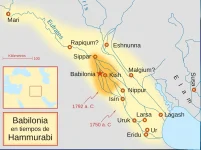
"Receding water levels in the Euphrates River have exposed a wide array of archaeological treasures across Iraq, Syria, and Turkey, primarily due to severe droughts and dam management. Key findings include ancient cities like Zakhiku (associated with the Mitanni Empire) and the Talbes kingdom, alongside previously submerged sites such as Ur, Uruk, and Dura-Europos.

Significant artifacts and structures revealed include:

Cuneiform tablets and clay envelopes, some described as surviving underwater for centuries in a "miracle" of preservation.
Tombs and burial sites, including pre-Christian rock-cut tombs in Anbar, Hellenistic-era graves in Duhok, and a large Byzantine cemetery in Raqqa.
Monuments and castles, such as Hastek Castle in Turkey and the Palace of the Ladies (Qasr al-Banat) in Syria.
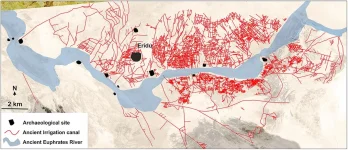
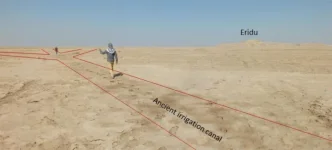
Infrastructure, including ancient irrigation canals near Eridu, bridges, and building foundations that highlight sophisticated water management systems.

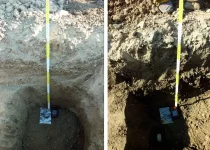
The Eridu canal network (the major 2025 discovery) is definitively not Roman. AMS radiocarbon dating of the canals and surrounding deposits places them in the fifth to third millennium BC — squarely in the Sumerian period. The oldest date is 4540–4443 cal BC, with the more organized, gridded canal systems dating to the third millennium BC, contemporary with the occupation of Eridu itself. The region was abandoned after the early first millennium BC when the Euphrates shifted course, so no Roman-era activity is present there.

A separate Roman-era irrigation ditch was identified in 2009 on the banks of the Euphrates in Anbar province, northern Iraq. Iraqi archaeologist Ratib and a colleague found a stone-lined channel with associated Roman-period pottery shards, which they dated to the Roman era based on the ceramic assemblage. This is a much smaller, single feature rather than a network.

So the evidence is clear: the vast canal systems exposed in the receding waters are Sumerian, confirmed by scientific dating. The only Roman attribution comes from a single ditch identified by its associated pottery, not by the canals themselves.

These discoveries offer unprecedented insights into the political, economic, and cultural history of ancient Mesopotamian civilizations, though they also face risks from looting and environmental exposure."

Interpretations from the Book of Revelation​

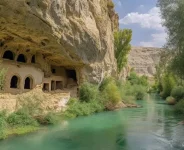
Religious leaders have cited passages from the Book of Revelation as evidence that the end times are near. The drying of the Euphrates River, coupled with the discovery of the mysterious caves, has fueled these beliefs. However, these interpretations remain speculative and open to debate.

1793232663836.webp

1793229960814.webp


1793229738185.webp

Ancient 6,000-Year-Old Irrigation Network Discovered in Mesopotamia​

1793231933535.webpArchaeologists have uncovered irrigation networks dating back nearly 6,000 years near Eridu, the ancient Sumerian city long regarded in Mesopotamian tradition as the world’s first city.

Ongoing Investigations and Research​

As the Euphrates River continues to dry up, archaeologists, historians, and religious scholars are hard at work deciphering the numerous discoveries that have been unearthed. While some findings have generated more questions than answers, these investigations are essential for understanding the river’s history and cultural significance.

Interesting videos, with much speculation ... take out of them what you will : )


Attachments

  • 1793229904526.webp
    1793229904526.webp
    88.6 KB · Views: 0
Last edited:
Back
Top Bottom