


Yesua888
Well-known member
- Joined
- Nov 15, 2025
- Messages
- 765
- Reaction score
- 683
- Points
- 93
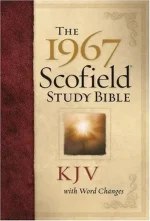
Were the Study Notes of the KJV Bible, the only version influenced Scofield edited translations?
No, the Scofield study notes have influenced far beyond the KJV. While the original 1909 and 1917 editions used the KJV text with added notes, the theological framework—especially dispensationalism and Christian Zionism—spread widely across denominations and Bible translations.
The following is a quick study of apparently how the bible has been altered over time:
What has the Scofield Reference Bible, Zionism and Christianity have in common?
The Scofield Reference Bible, first published in 1909 and revised in 1917 by Cyrus Ingerson Scofield, is widely credited with popularizing Christian Zionism and dispensationalism within American evangelicalism. Scofield's extensive marginal notes reinterpreted the King James Version to assert that the Jewish return to Palestine was a divine prophecy, effectively framing the modern State of Israel as central to God's plan and creating a theological mandate for unconditional Christian support of Israel.
Critics and historical accounts argue that Scofield's framework was influenced by Zionist financiers like Samuel Untermeyer and was designed to inject pro-Zionist ideology into Protestant theology. By promoting a rigid literalist lens that divided history into seven "dispensations," the text positioned the land of Palestine as eternally promised to the descendants of Abraham while largely sidelining the rights and history of Palestinians, including Arab Christians and Muslims who had long inhabited the region.
This theological shift profoundly shaped U.S. foreign policy and evangelical culture, leading figures like John Hagee and organizations such as Christians United for Israel (CUFI) to rally millions of believers behind Israel. While supporters view Scofield's work as a fulfillment of biblical prophecy, opponents contend it promotes a one-sided theology that exacerbates tensions in the Middle East, justifies racism, and undermines peace efforts by prioritizing eschatological speculation over historical justice.
How do we know that Schoefield changed the King James version of the Bible in 1909?
The Scofield Reference Bible (1909) did not alter the text of the King James Version (KJV) itself. Instead, it used the standard KJV text and added study notes, cross-references, and commentary—most notably promoting dispensationalism and Christian Zionism—in the margins and footnotes. These notes, authored by Cyrus I. Scofield, interpreted Scripture through a specific theological lens but left the biblical text unchanged.
However, later revisions—particularly the 1967 New Scofield Reference Bible—did modify the KJV text. This edition introduced over 6,500 textual changes to align with modern translations like the RSV and NASB, including altered wording in key passages (e.g., "a son of the gods" instead of "the Son of God" in Daniel 3:25). These changes were made by a committee after Scofield’s death and are not reflective of his original 1909 or 1917 editions.
Thus, while the original 1909 Scofield Bible preserved the KJV text, its 1967 revision significantly altered it, leading critics to argue it is no longer a true KJV or Scofield Bible.
Were the Study Notes of the KJV Bible, the only version influenced Scofield edited translations?
No, the Scofield study notes have influenced far beyond the KJV. While the original 1909 and 1917 editions used the KJV text with added notes, the theological framework—especially dispensationalism and Christian Zionism—spread widely across denominations and Bible translations.
Later revisions, like the 1967 New Scofield Reference Bible, incorporated textual changes aligning with modern translations (e.g., RSV, NASB), and the 1984 edition adapted all notes to the NIV, showing the notes' influence extended to other Bible versions. The Scofield system shaped evangelical eschatology regardless of translation, impacting study Bibles, preaching, and theology worldwide.
Are there older bibles on record, that have not been influenced by these Scofield note?
Yes, many older Bibles predate and remain unaffected by Scofield's notes. The Scofield Reference Bible (1909) was one of the first study Bibles to gain widespread popularity, but numerous Bibles existed long before it—both in translation and manuscript form—that contain no Scofield influence.
Examples include:
The Gutenberg Bible (1455) – The first major printed Bible in the West, based on the Latin Vulgate.
The King James Version (1611) – Published nearly 300 years before Scofield’s edition, used by generations without dispensational commentary.
The Geneva Bible (1560) – A major English translation predating the KJV, popular among Puritans and Pilgrims.
Septuagint (3rd–2nd century BCE) – The ancient Greek translation of the Hebrew Scriptures.
Dead Sea Scrolls (3rd century BCE – 1st century CE) – The oldest known biblical manuscripts.
Even among modern study Bibles, many use alternative theological frameworks—such as Reformed, Catholic, or historical-critical perspectives—and deliberately avoid Scofield’s dispensationalism.
This is an interesting video: on "Zionism" - "what if ..."
Are there any further studies on this subject, that should be shared?


