


- Joined
- May 13, 2025
- Messages
- 1,323
- Reaction score
- 1,794
- Points
- 113
- Age
- 67
- Location
- Charlestown, IN
- Website
- know-the-bible.com
- Gender
- Male
- Country
- United States
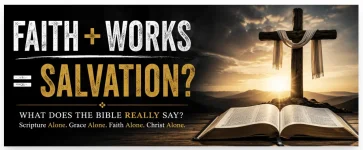
It sounds reasonable to some people: faith matters, works matter, so put them together and call that salvation. But when Scripture tells us how a sinner is justified before God, it does not give us that formula. The difference is not small. It is the difference between receiving salvation as a gift and trying to add something of our own to what Christ has already done.
Acts 15 shows us exactly how serious this issue is. Certain men were teaching, “Except ye be circumcised after the manner of Moses, ye cannot be saved” (Acts 15:1, KJV).
Notice what they did. They did not necessarily deny Jesus. They added something that had to be done in order to be saved. Faith in Christ was not enough in their system. Circumcision had to be added.
That teaching was rejected.
Paul later wrote:
Then he drove the point home:“Knowing that a man is not justified by the works of the law, but by the faith of Jesus Christ... for by the works of the law shall no flesh be justified.”
Galatians 2:16, KJV
The issue is not whether obedience is good. The issue is whether our obedience becomes part of the reason God saves or justifies us.“I do not frustrate the grace of God: for if righteousness come by the law, then Christ is dead in vain.”
Galatians 2:21, KJV
Ephesians 2 answers that clearly:
Then Paul immediately speaks about good works:“For by grace are ye saved through faith; and that not of yourselves: it is the gift of God: Not of works, lest any man should boast.”
Ephesians 2:8-9, KJV
There is the order. We are not saved by good works. We are saved unto good works.“For we are his workmanship, created in Christ Jesus unto good works...”
Ephesians 2:10, KJV
That distinction matters.
Good works are not the engine pulling salvation down the track. They are the evidence that God has already done a work in us. The believer does not obey in order to purchase justification. He obeys because he belongs to Christ.
Titus 3:5 makes the same truth impossible to miss:
Paul does not merely exclude bad works. He excludes “works of righteousness which we have done.” That means even our best deeds cannot become part of the ground of salvation.“Not by works of righteousness which we have done, but according to his mercy he saved us...”
Romans 4 goes further:
Paul places working on one side and believing on the other. One produces debt. The other receives grace.“Now to him that worketh is the reward not reckoned of grace, but of debt. But to him that worketh not, but believeth on him that justifieth the ungodly, his faith is counted for righteousness.”
Romans 4:4-5, KJV
If salvation were owed because of what we did, it would no longer be grace.
That is exactly what Romans 11:6 says:
This does not cancel James. James teaches that dead faith produces nothing. A person can claim to believe while his life gives no evidence of spiritual life at all. Genuine faith bears fruit.“And if by grace, then is it no more of works: otherwise grace is no more grace.”
But there is a world of difference between saying, “Saving faith produces works,” and saying, “Faith plus works produces salvation.”
The first is biblical. The second reverses the order Scripture gives us.
Christ did not die on the cross to provide most of salvation and leave us to finish the job. He bore our sins. He rose again. He is the One in whom the believer stands righteous before God. Our obedience cannot improve His sacrifice, add righteousness to His righteousness, or make His finished work more complete.
That should change how we live.
The believer should pursue holiness, obey Christ, serve others, forgive, love, give, endure, and bear fruit. But he should never look back at those works and say, “This is why God accepts me.”
Our confidence is not in what we have done for Christ. Our confidence is in what Christ has done for us.
When works are put in their proper place, they glorify God. When works are moved into the place of justification, they rob grace of its meaning.
The takeaway is simple: we are saved by grace through faith, apart from works, and the salvation God gives produces good works. Do not confuse the fruit with the root.


