Daniel Chapter 7

Rose

Active member
Joined
Jan 30, 2026
Messages
95
Reaction score
50
Points
18
  1. If Daniel 7 happened before the party in Daniel 5 where Babylon falls, why do you think was it not written before Daniel 5?
  2. Verse 1 says Daniel immediately wrote down his dream. Why?
  3. Who is the person standing near God's throne that Daniel talks to in the dream?
  4. What do these symbols represent in prophecy: the sea, the four winds, the number four, the ribs, the horns, and the saints?
  5. Why were the four empires represented by a statue of metal in Daniel 2 and great beasts in Daniel 7?
  6. Why does God picture human empires as vicious, wild beasts?
  7. What is significant about the eyes and boasting mouth on the "little horn"? How does he try to wear down God's people?
  8. Explain Daniel 7:25 where it says he will think to 'change times and laws?
  9. What is the main point of the "three and a half years" timeframe?
  10. Has Jesus already been given this kingdom or is it something that only happens when He returns?
  11. Even after learning that God wins in the end, Daniel is still terrified and visibly shaken at the end of the chapter. Why?
  12. When reading Daniel 7, do the lion, bear, and leopard strictly refer to ancient empires (Babylon, Medo-Persia, Greece), or do they have modern applications to nations like Great Britain, the US, and Russia?

​

 
Last edited:
  1. If Daniel 7 happened before the party in Daniel 5 where Babylon falls, why do you think was it not written before Daniel 5?
  2. Verse 1 says Daniel immediately wrote down his dream. Why?
  3. Who is the person standing near God's throne that Daniel talks to in the dream?
  4. What do these symbols represent in prophecy: the sea, the four winds, the number four, the ribs, the horns, and the saints?
  5. Why were the four empires represented by a statue of metal in Daniel 2 and great beasts in Daniel 7?
  6. Why does God picture human empires as vicious, wild beasts?

Daniel Chapter 7: Understanding the Four Beasts, the Little Horn, and God's Everlasting Kingdom​

Daniel 7 gives us a remarkable look at the rise and fall of earthly kingdoms and the final victory of God's kingdom. But there are some difficult questions in this chapter, and I think we need to be careful not to make Scripture say more than it actually says.

I've divided the twelve questions into two posts so we can take our time examining what God has revealed.

Post 1: Daniel 7, Questions 1–6​

1. If Daniel 7 happened before the party in Daniel 5 where Babylon falls, why do you think it was not written before Daniel 5?​

I think the simplest explanation is that the book of Daniel is arranged partly by subject rather than strictly by the order in which everything happened.

Daniel 1–6 mainly tells us what happened to Daniel and his friends under different kings. Beginning with chapter 7, the focus shifts to the prophetic visions God gave Daniel.

Daniel 7:1 tells us the vision came during the first year of Belshazzar, while Daniel 5 records the final night of Belshazzar's reign.

Here's something interesting. In Daniel 2, God revealed the future kingdoms to Nebuchadnezzar through a great image. In Daniel 7, God reveals kingdoms to Daniel through four terrifying beasts. Putting the visions together helps us see the same general subject from two very different perspectives.

The Bible doesn't specifically explain why the chapters were arranged this way, but the arrangement does make the difference between the historical accounts and prophetic visions easier to recognize.

2. Verse 1 says Daniel immediately wrote down his dream. Why?​

Daniel 7:1 says:

"Then he wrote the dream, and told the sum of the matters."
Notice that the verse says Daniel wrote the dream, but it doesn't specifically say how quickly he did so.

I believe Daniel understood that this was something important enough to preserve. It wasn't an ordinary dream. God was revealing things concerning future kingdoms, judgment, and the everlasting kingdom of the Son of man.

Writing it down preserved the revelation so it could be examined later.

Habakkuk 2:2 provides an interesting comparison:

"Write the vision, and make it plain upon tables, that he may run that readeth it."
Think about how much we would have lost if Daniel had never written these things down. Centuries later, we're still studying the vision and comparing it with other passages of Scripture.

It reminds me of someone witnessing an important event and recording exactly what happened rather than trusting his memory years later. But Daniel was preserving something far more important than ordinary history.

3. Who is the person standing near God's throne that Daniel talks to in the dream?​

Daniel 7:16 says:

"I came near unto one of them that stood by, and asked him the truth of all this."
The chapter doesn't specifically identify this person.

Daniel sees thousands ministering before the Ancient of days in verse 10. Then in verse 16, he approaches one of those standing nearby and asks for an explanation.

It is reasonable to understand this as an angelic being attending God's heavenly court, especially since angels explain visions elsewhere in Daniel.

For example, Daniel 8:16 identifies Gabriel as the one instructed to explain another vision.

But Daniel 7 never names this particular individual, so we shouldn't claim to know more than Scripture tells us.

What I find interesting is that Daniel needed someone to explain what he had seen. Receiving a vision from God didn't mean Daniel automatically understood everything in it.

That's a good reminder for us when studying prophecy.

4. What do these symbols represent in prophecy: the sea, the four winds, the number four, the ribs, the horns, and the saints?​

Some of these symbols are explained directly in Scripture. Others require more caution.

The sea: Daniel sees four beasts rising out of the great sea (Daniel 7:2-3). Revelation 17:15 uses waters to represent peoples, multitudes, nations, and tongues. That provides a possible parallel, suggesting the turmoil of nations. However, Daniel 7 itself doesn't explicitly define the sea.

The four winds: Daniel 7:2 describes the four winds of heaven stirring up the sea. These may picture powerful movements affecting the nations. Jeremiah 49:36 also uses four winds in describing judgment. Scripture doesn't give us a precise definition of the four winds in Daniel's vision.

The number four: Here we have something definite. Daniel 7:17 says:

"These great beasts, which are four, are four kings, which shall arise out of the earth."
The four beasts represent four kings or kingdoms. The number four identifies their number in this vision, not necessarily every kingdom that will ever exist.

The ribs: The bear in Daniel 7:5 has three ribs in its mouth. Since the bear is commanded to devour much flesh, the ribs may represent conquered peoples or kingdoms. However, the chapter never specifically identifies the three ribs. We should not insist on a particular historical identification without sufficient biblical evidence.

The horns: This symbol is directly explained. Daniel 7:24 says:

"And the ten horns out of this kingdom are ten kings that shall arise."
The horns represent kings associated with the fourth kingdom. We also see horns representing kings and kingdoms in Daniel 8:20-22.

The saints: Daniel 7:18 identifies them as "the saints of the most High." These are God's holy people, who ultimately receive the kingdom. Daniel 7:21 also tells us they experience persecution before that victory.

One thing worth remembering is that the Bible does not give every prophetic symbol one fixed meaning in every passage. We have to examine each symbol in its own context.

5. Why were the four empires represented by a statue of metal in Daniel 2 and great beasts in Daniel 7?​

This is one of the most interesting comparisons in the book.

In Daniel 2, Nebuchadnezzar sees a magnificent image made of gold, silver, brass, iron, and clay. The image appears impressive, but eventually a stone strikes it and destroys it.

In Daniel 7, Daniel sees terrifying beasts rising out of a troubled sea.

Why the difference?

I think we are being shown two perspectives on earthly power.

To mankind, kingdoms often appear glorious. We admire their wealth, buildings, military strength, accomplishments, and influence.

But Daniel 7 exposes their violent and destructive character.

Think about the great empires throughout history. People still admire their buildings and achievements, but those same empires often conquered nations, enslaved people, and destroyed anyone standing in their way.

The statue shows impressive worldly power. The beasts emphasize its destructive character.

There's another important similarity. Neither the great image nor the beasts have the final victory.

Daniel 2:44 says God will establish a kingdom that "shall never be destroyed."

Daniel 7:14 says the Son of man's kingdom "shall not pass away."

Both visions point us toward the same final truth. The kingdoms of this world are temporary, but God's kingdom is everlasting.

6. Why does God picture human empires as vicious, wild beasts?​

I believe the description shows what happens when powerful rulers exercise dominion through conquest, violence, and oppression.

Daniel 7:7 describes the fourth beast as:

"Dreadful and terrible, and strong exceedingly; and it had great iron teeth: it devoured and brake in pieces, and stamped the residue with the feet of it."
That's quite a picture of worldly power.

Instead of protecting people, these kingdoms often destroy them. Instead of serving others, they demand submission.

Think of a wild animal that attacks because it has the strength to overpower its prey. Many earthly rulers have behaved in much the same way, taking whatever they could through force.

But we should notice something else. God is not saying that every government or ruler is equally evil. Romans 13:1-4 teaches that governing authority has a God-given responsibility to punish wrongdoing.

Daniel 7 is showing us the character of the oppressive kingdoms in this particular vision.

And look at the contrast with Jesus.

In Matthew 20:25-28, Jesus explains that Gentile rulers exercise dominion over others, but His followers are called to serve.

The beasts devour others to increase their power.

Jesus gave His life as a ransom for many.

What a difference between the kingdoms of this world and the kingdom of Christ.
 
7. What is significant about the eyes and boasting mouth on the "little horn"? How does he try to wear down God's people?
8. Explain Daniel 7:25 where it says he will think to 'change times and laws?
9. What is the main point of the "three and a half years" timeframe?
10. Has Jesus already been given this kingdom or is it something that only happens when He returns?
11, Even after learning that God wins in the end, Daniel is still terrified and visibly shaken at the end of the chapter. Why?
12.When reading Daniel 7, do the lion, bear, and leopard strictly refer to ancient empires (Babylon, Medo-Persia, Greece), or do they have modern applications to nations like Great Britain, the US, and Russia?

Post 2: Daniel 7, Questions 7–12​

7. What is significant about the eyes and boasting mouth on the "little horn"? How does he try to wear down God's people?​

Daniel 7:8 describes the little horn as having:

"Eyes like the eyes of man, and a mouth speaking great things."
Later, Daniel 7:25 says:

"And he shall speak great words against the most High, and shall wear out the saints of the most High."
The eyes are unusual because this horn is given human characteristics. The chapter doesn't explain exactly what the eyes symbolize, so we should be cautious about assigning them a specific meaning.

However, the mouth is much clearer. This ruler speaks arrogantly against God.

He isn't simply exercising political authority. He is placing himself in opposition to the Most High.

And he doesn't stop with words.

Daniel 7:21 says:

"I beheld, and the same horn made war with the saints, and prevailed against them."
That tells us his opposition includes actual persecution.

The expression "wear out the saints" suggests sustained oppression that exhausts and weakens God's people.

Think of someone constantly applying pressure to another person, hoping eventually they will give up resisting. It may involve threats, punishment, intimidation, or repeated attacks.

That's the sort of opposition described here.

But notice that Daniel doesn't say the little horn ultimately destroys God's people. His power is temporary, and God eventually takes away his dominion.

8. Explain Daniel 7:25 where it says he will think to "change times and laws."​

Daniel 7:25 says:

"And he shall speak great words against the most High, and shall wear out the saints of the most High, and think to change times and laws."
The little horn is not satisfied with persecuting God's people. He also attempts to exercise authority over established times and laws.

Some interpret this as an attempt to change God's appointed religious observances. Others understand it more broadly as an attempt to reshape established laws and governing arrangements.

The verse itself doesn't identify the particular times or laws involved.

But the context is important.

This ruler speaks against the Most High, persecutes His saints, and attempts to change established times and laws. His attitude is one of arrogance and opposition to God.

Daniel 2:21 tells us something important about God's authority:

"And he changeth the times and the seasons: he removeth kings, and setteth up kings."
God has authority over times, seasons, and rulers.

The little horn acts as though he possesses authority that ultimately belongs to God.

And notice the wording. He will think to change times and laws.

That doesn't mean he can overturn God's eternal purposes.

We should also be careful not to build an entire prophetic interpretation around a particular calendar change, worship day, or human institution when Daniel 7 does not specifically identify one.

The main point is the ruler's arrogant attempt to exercise authority in defiance of God.

9. What is the main point of the "three and a half years" timeframe?​

Daniel 7:25 says the saints will be given into his hand:

"Until a time and times and the dividing of time."
This is commonly understood as one time, two times, and half a time, totaling three and a half times or years.

We find similar expressions in Revelation.

Revelation 12:14 speaks of "a time, and times, and half a time."

Revelation 13:5 describes a beast exercising authority for forty-two months.

Revelation 11:3 mentions 1,260 days.

These passages invite comparison, although we need to examine their individual contexts before assuming every reference describes precisely the same events.

But I think the most important point in Daniel 7 is that the persecution has a limit.

The little horn does not get unlimited time to persecute God's people.

God has already determined the boundaries of his dominion.

Imagine someone being allowed to exercise temporary authority, knowing that a specific day is coming when that authority will be taken away.

That's what Daniel describes.

The ruler may boast and persecute, but he cannot prevent the judgment of God.

Daniel 7:26 tells us:

"But the judgment shall sit, and they shall take away his dominion, to consume and to destroy it unto the end."
For Christians facing persecution, that is a tremendous encouragement. The suffering may be real, but the persecutor does not have the final word.

10. Has Jesus already been given this kingdom or is it something that only happens when He returns?​

I believe Scripture shows us that Jesus has already received authority and kingship, but the complete fulfillment of His reign over all opposition is still ahead.

Daniel 7:13-14 describes the Son of man coming to the Ancient of days and receiving dominion, glory, and a kingdom.

Notice the direction of the scene. The Son of man comes to the Ancient of days, not from heaven down to earth.

After His resurrection, Jesus declared:

"All power is given unto me in heaven and in earth." (Matthew 28:18)
Peter also tells us that Jesus has been exalted to God's right hand (Acts 2:32-36).

And Ephesians 1:20-22 says God raised Christ and seated Him at His right hand, placing all things under His feet.

That is already accomplished.

But Hebrews 2:8 makes another important observation:

"But now we see not yet all things put under him."
Christ possesses all authority, yet we still see opposition, rebellion, suffering, and death in this present world.

First Corinthians 15:25 says:

"For he must reign, till he hath put all enemies under his feet."
So I don't believe we have to choose between Jesus receiving His kingdom now and reigning openly in final victory when He returns.

Scripture teaches both His present authority and the future completion of His victory.

Jesus is King now. The day is coming when every enemy will be defeated, and His reign will be openly acknowledged.

Philippians 2:10-11 tells us that every knee will bow and every tongue confess that Jesus Christ is Lord.

11. Even after learning that God wins in the end, Daniel is still terrified and visibly shaken at the end of the chapter. Why?​

Daniel 7:28 says:

"As for me Daniel, my cogitations much troubled me, and my countenance changed in me: but I kept the matter in my heart."
I find this especially interesting because Daniel had just learned that God's kingdom would ultimately triumph.

So why was he still troubled?

I believe the answer is found in what he saw happening before that victory.

Daniel witnessed terrifying kingdoms, tremendous destruction, a blasphemous ruler, and severe persecution of God's people.

Daniel 7:21 says the little horn made war against the saints and prevailed against them.

Even though Daniel knew God would eventually bring judgment, the suffering he had seen was still deeply disturbing.

Think about being told that someone you love will survive a terrible ordeal. Knowing the final outcome would certainly give you hope, but it wouldn't necessarily remove your distress over what they must endure.

Daniel understood that terrible things would happen before the final victory.

I also think his reaction should teach us something about studying prophecy.

Daniel didn't treat the vision as entertainment or an opportunity to impress others with predictions.

He was deeply affected by what God had shown him.

Sometimes people discuss prophecy almost like they're solving a puzzle, trying to identify every ruler and future event while overlooking the suffering, judgment, and holiness of God described in the passage.

Daniel's reaction reminds us that these things are serious.

12. When reading Daniel 7, do the lion, bear, and leopard strictly refer to ancient empires (Babylon, Medo-Persia, Greece), or do they have modern applications to nations like Great Britain, the US, and Russia?​

I believe we need to begin with what Scripture actually tells us rather than looking at modern nations and trying to fit them into Daniel's vision.

Daniel 7:17 says:

"These great beasts, which are four, are four kings, which shall arise out of the earth."
Daniel 7:23 further explains that the fourth beast represents a fourth kingdom.

Daniel 2 provides an important parallel. Nebuchadnezzar was explicitly identified as the head of gold in Daniel 2:38, connecting that kingdom with Babylon.

Daniel 8:20-21 also specifically identifies the kings of Media and Persia and the king of Grecia in another vision.

These passages give us strong reasons to understand Daniel's visions against the background of the ancient kingdoms that followed Babylon.

The commonly understood sequence is Babylon, Medo-Persia, Greece, and a fourth kingdom often identified as Rome. However, Daniel 7 itself does not name each of the four beasts, and Daniel 8's vision is a separate vision. We should distinguish these conclusions from the names Scripture directly supplies.

Now, what about Great Britain, Russia, and the United States?

Some people have suggested that the lion represents Great Britain, the bear represents Russia, and the leopard represents another modern power. These interpretations often depend on national symbols or perceived similarities.

But where does Daniel 7 actually identify those nations?

It doesn't.

And I think that's where we need to be careful.

A lion is not automatically Great Britain because Britain has used a lion as a national symbol. A bear is not automatically Russia because the bear is associated with Russia.

Those modern associations do not establish what Daniel's vision means.

We cannot read our own time and national symbols back into Scripture and then claim God specifically identified those countries.

Could Daniel's descriptions have lessons that apply to modern governments? Certainly.

Modern nations can become arrogant, oppressive, violent, and hostile toward God's people just as ancient kingdoms did.

But that is an application of the passage, not proof that the beasts specifically represent modern nations.

There is also an interesting connection with Revelation 13:2, where John sees a beast described with features resembling a leopard, bear, and lion.

That shows these images remain significant in later prophecy. But even there, we need to interpret the symbols from Scripture rather than assigning modern countries to them without biblical support.

My conclusion is that the beasts describe real kingdoms in the prophetic vision, and their characteristics provide warnings that remain relevant today. But Scripture does not authorize us to identify the lion as Great Britain, the bear as Russia, or the leopard as the United States.

If someone believes those identifications are correct, I would simply ask them to show where Scripture makes that connection.


A final thought for our Daniel 7 discussion​

What stands out to me in this chapter is that Daniel sees the world being ruled by terrifying beasts, but then suddenly his attention is directed toward heaven.

Daniel 7:9 says:

"I beheld till the thrones were cast down, and the Ancient of days did sit."
Think about that.

The beasts are raging, rulers are boasting, and God's people are suffering.

But God is seated on His throne.

He isn't struggling to regain control. He isn't wondering what the next kingdom will do. He already knows how it ends.

And that brings me to one question I think all of us ought to consider.

When we look at everything happening in our world today, are we spending more time worrying about the beasts or trusting the One who sits on the throne?

Daniel 7 doesn't tell us that God's people will never experience hardship. In fact, it tells us the opposite.

But it does tell us that the kingdoms of this world will not have the final victory.

Daniel 7:27 says:

"And his kingdom is an everlasting kingdom, and all dominions shall serve and obey him."
That's where the chapter leaves us. Not with the beasts, not with the little horn, and not with human rulers, but with God's everlasting kingdom.
 

Post 2: Daniel 7, Questions 7–12​

7. What is significant about the eyes and boasting mouth on the "little horn"? How does he try to wear down God's people?​

Daniel 7:8 describes the little horn as having:


Later, Daniel 7:25 says:


The eyes are unusual because this horn is given human characteristics. The chapter doesn't explain exactly what the eyes symbolize, so we should be cautious about assigning them a specific meaning.

However, the mouth is much clearer. This ruler speaks arrogantly against God.

He isn't simply exercising political authority. He is placing himself in opposition to the Most High.

And he doesn't stop with words.

Daniel 7:21 says:


That tells us his opposition includes actual persecution.

The expression "wear out the saints" suggests sustained oppression that exhausts and weakens God's people.

Think of someone constantly applying pressure to another person, hoping eventually they will give up resisting. It may involve threats, punishment, intimidation, or repeated attacks.

That's the sort of opposition described here.

But notice that Daniel doesn't say the little horn ultimately destroys God's people. His power is temporary, and God eventually takes away his dominion.

8. Explain Daniel 7:25 where it says he will think to "change times and laws."​

Daniel 7:25 says:


The little horn is not satisfied with persecuting God's people. He also attempts to exercise authority over established times and laws.

Some interpret this as an attempt to change God's appointed religious observances. Others understand it more broadly as an attempt to reshape established laws and governing arrangements.

The verse itself doesn't identify the particular times or laws involved.

But the context is important.

This ruler speaks against the Most High, persecutes His saints, and attempts to change established times and laws. His attitude is one of arrogance and opposition to God.

Daniel 2:21 tells us something important about God's authority:


God has authority over times, seasons, and rulers.

The little horn acts as though he possesses authority that ultimately belongs to God.

And notice the wording. He will think to change times and laws.

That doesn't mean he can overturn God's eternal purposes.

We should also be careful not to build an entire prophetic interpretation around a particular calendar change, worship day, or human institution when Daniel 7 does not specifically identify one.

The main point is the ruler's arrogant attempt to exercise authority in defiance of God.

9. What is the main point of the "three and a half years" timeframe?​

Daniel 7:25 says the saints will be given into his hand:


This is commonly understood as one time, two times, and half a time, totaling three and a half times or years.

We find similar expressions in Revelation.

Revelation 12:14 speaks of "a time, and times, and half a time."

Revelation 13:5 describes a beast exercising authority for forty-two months.

Revelation 11:3 mentions 1,260 days.

These passages invite comparison, although we need to examine their individual contexts before assuming every reference describes precisely the same events.

But I think the most important point in Daniel 7 is that the persecution has a limit.

The little horn does not get unlimited time to persecute God's people.

God has already determined the boundaries of his dominion.

Imagine someone being allowed to exercise temporary authority, knowing that a specific day is coming when that authority will be taken away.

That's what Daniel describes.

The ruler may boast and persecute, but he cannot prevent the judgment of God.

Daniel 7:26 tells us:


For Christians facing persecution, that is a tremendous encouragement. The suffering may be real, but the persecutor does not have the final word.

10. Has Jesus already been given this kingdom or is it something that only happens when He returns?​

I believe Scripture shows us that Jesus has already received authority and kingship, but the complete fulfillment of His reign over all opposition is still ahead.

Daniel 7:13-14 describes the Son of man coming to the Ancient of days and receiving dominion, glory, and a kingdom.

Notice the direction of the scene. The Son of man comes to the Ancient of days, not from heaven down to earth.

After His resurrection, Jesus declared:


Peter also tells us that Jesus has been exalted to God's right hand (Acts 2:32-36).

And Ephesians 1:20-22 says God raised Christ and seated Him at His right hand, placing all things under His feet.

That is already accomplished.

But Hebrews 2:8 makes another important observation:


Christ possesses all authority, yet we still see opposition, rebellion, suffering, and death in this present world.

First Corinthians 15:25 says:


So I don't believe we have to choose between Jesus receiving His kingdom now and reigning openly in final victory when He returns.

Scripture teaches both His present authority and the future completion of His victory.

Jesus is King now. The day is coming when every enemy will be defeated, and His reign will be openly acknowledged.

Philippians 2:10-11 tells us that every knee will bow and every tongue confess that Jesus Christ is Lord.

11. Even after learning that God wins in the end, Daniel is still terrified and visibly shaken at the end of the chapter. Why?​

Daniel 7:28 says:


I find this especially interesting because Daniel had just learned that God's kingdom would ultimately triumph.

So why was he still troubled?

I believe the answer is found in what he saw happening before that victory.

Daniel witnessed terrifying kingdoms, tremendous destruction, a blasphemous ruler, and severe persecution of God's people.

Daniel 7:21 says the little horn made war against the saints and prevailed against them.

Even though Daniel knew God would eventually bring judgment, the suffering he had seen was still deeply disturbing.

Think about being told that someone you love will survive a terrible ordeal. Knowing the final outcome would certainly give you hope, but it wouldn't necessarily remove your distress over what they must endure.

Daniel understood that terrible things would happen before the final victory.

I also think his reaction should teach us something about studying prophecy.

Daniel didn't treat the vision as entertainment or an opportunity to impress others with predictions.

He was deeply affected by what God had shown him.

Sometimes people discuss prophecy almost like they're solving a puzzle, trying to identify every ruler and future event while overlooking the suffering, judgment, and holiness of God described in the passage.

Daniel's reaction reminds us that these things are serious.

12. When reading Daniel 7, do the lion, bear, and leopard strictly refer to ancient empires (Babylon, Medo-Persia, Greece), or do they have modern applications to nations like Great Britain, the US, and Russia?​

I believe we need to begin with what Scripture actually tells us rather than looking at modern nations and trying to fit them into Daniel's vision.

Daniel 7:17 says:


Daniel 7:23 further explains that the fourth beast represents a fourth kingdom.

Daniel 2 provides an important parallel. Nebuchadnezzar was explicitly identified as the head of gold in Daniel 2:38, connecting that kingdom with Babylon.

Daniel 8:20-21 also specifically identifies the kings of Media and Persia and the king of Grecia in another vision.

These passages give us strong reasons to understand Daniel's visions against the background of the ancient kingdoms that followed Babylon.

The commonly understood sequence is Babylon, Medo-Persia, Greece, and a fourth kingdom often identified as Rome. However, Daniel 7 itself does not name each of the four beasts, and Daniel 8's vision is a separate vision. We should distinguish these conclusions from the names Scripture directly supplies.

Now, what about Great Britain, Russia, and the United States?

Some people have suggested that the lion represents Great Britain, the bear represents Russia, and the leopard represents another modern power. These interpretations often depend on national symbols or perceived similarities.

But where does Daniel 7 actually identify those nations?

It doesn't.

And I think that's where we need to be careful.

A lion is not automatically Great Britain because Britain has used a lion as a national symbol. A bear is not automatically Russia because the bear is associated with Russia.

Those modern associations do not establish what Daniel's vision means.

We cannot read our own time and national symbols back into Scripture and then claim God specifically identified those countries.

Could Daniel's descriptions have lessons that apply to modern governments? Certainly.

Modern nations can become arrogant, oppressive, violent, and hostile toward God's people just as ancient kingdoms did.

But that is an application of the passage, not proof that the beasts specifically represent modern nations.

There is also an interesting connection with Revelation 13:2, where John sees a beast described with features resembling a leopard, bear, and lion.

That shows these images remain significant in later prophecy. But even there, we need to interpret the symbols from Scripture rather than assigning modern countries to them without biblical support.

My conclusion is that the beasts describe real kingdoms in the prophetic vision, and their characteristics provide warnings that remain relevant today. But Scripture does not authorize us to identify the lion as Great Britain, the bear as Russia, or the leopard as the United States.

If someone believes those identifications are correct, I would simply ask them to show where Scripture makes that connection.


A final thought for our Daniel 7 discussion​

What stands out to me in this chapter is that Daniel sees the world being ruled by terrifying beasts, but then suddenly his attention is directed toward heaven.

Daniel 7:9 says:


Think about that.

The beasts are raging, rulers are boasting, and God's people are suffering.

But God is seated on His throne.

He isn't struggling to regain control. He isn't wondering what the next kingdom will do. He already knows how it ends.

And that brings me to one question I think all of us ought to consider.

When we look at everything happening in our world today, are we spending more time worrying about the beasts or trusting the One who sits on the throne?

Daniel 7 doesn't tell us that God's people will never experience hardship. In fact, it tells us the opposite.

But it does tell us that the kingdoms of this world will not have the final victory.

Daniel 7:27 says:


That's where the chapter leaves us. Not with the beasts, not with the little horn, and not with human rulers, but with God's everlasting kingdom.
@David - thank you for consistently taking the time to answer these questions and walk through the text with me. I genuinely appreciate the help.
 
  1. If Daniel 7 happened before the party in Daniel 5 where Babylon falls, why do you think was it not written before Daniel 5?
  2. Verse 1 says Daniel immediately wrote down his dream. Why?
  3. Who is the person standing near God's throne that Daniel talks to in the dream?
  4. What do these symbols represent in prophecy: the sea, the four winds, the number four, the ribs, the horns, and the saints?
  5. Why were the four empires represented by a statue of metal in Daniel 2 and great beasts in Daniel 7?
  6. Why does God picture human empires as vicious, wild beasts?
  7. What is significant about the eyes and boasting mouth on the "little horn"? How does he try to wear down God's people?
  8. Explain Daniel 7:25 where it says he will think to 'change times and laws?
  9. What is the main point of the "three and a half years" timeframe?
  10. Has Jesus already been given this kingdom or is it something that only happens when He returns?
  11. Even after learning that God wins in the end, Daniel is still terrified and visibly shaken at the end of the chapter. Why?
  12. When reading Daniel 7, do the lion, bear, and leopard strictly refer to ancient empires (Babylon, Medo-Persia, Greece), or do they have modern applications to nations like Great Britain, the US, and Russia?

​

In the 1700s the Rothschilds began taking over governments in Europe through central banks. The US fought the central bank of England, which was a Rothschild owned bank and the US won.
The Rothschilds wanted to take over the US and they had help (from the inside) doing it.
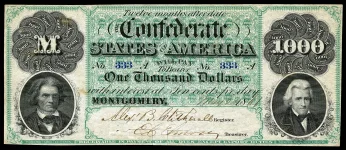
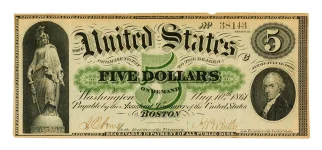
If you look at these notes, you can see that they are both made from the same company based in New York, it changed names to print money for the confederacy, but the goal was achieved in 1913 when the Federal Reserve was created and the US citizens began using central bank money,
Revelation 11: 12 And they heard a great voice from heaven saying unto them, Come up hither. And they ascended up to heaven in a cloud; and their enemies beheld them.
These attachments show a confederate states note and a united states note, both made from the same company, one called national bank note company, the other the american bank note company. (You can look at the notes and each one has in small print the maker of the note. That's why I shared those pictures on here.)
We can look back at history and see that now we have the federal reserve printing our money and we can see that the civil war was a device to get the central bank in power in the US.
Revelation 12:
3 And there appeared another wonder in heaven; and behold a great red dragon, having seven heads and ten horns, and seven crowns upon his heads.
4 And his tail drew the third part of the stars of heaven, and did cast them to the earth: and the dragon stood before the woman which was ready to be delivered, for to devour her child as soon as it was born.
5 And she brought forth a man child, who was to rule all nations with a rod of iron: and her child was caught up unto God, and to his throne.

Sounds like this red dragon (Rothschilds) swallowed up the government, ... Kronus swallowing up his children like Olives...

One thing central banks do is put their own enemies' portraits on the money. George Washington and Thomas Jefferson or any of them guys would NEVER us federal reserve notes as money... it's exactly what they fought!
They would not serve a king...
1792513457157.webp
see the crown?
 

Attachments

  • CSA-T1-$1000-1861.webp
    CSA-T1-$1000-1861.webp
    786.7 KB · Views: 0
  • 1861_Demand_Note.webp
    1861_Demand_Note.webp
    392.3 KB · Views: 0
In the 1700s the Rothschilds began taking over governments in Europe through central banks. The US fought the central bank of England, which was a Rothschild owned bank and the US won.
The Rothschilds wanted to take over the US and they had help (from the inside) doing it.
If you look at these notes, you can see that they are both made from the same company based in New York, it changed names to print money for the confederacy, but the goal was achieved in 1913 when the Federal Reserve was created and the US citizens began using central bank money,
Revelation 11: 12 And they heard a great voice from heaven saying unto them, Come up hither. And they ascended up to heaven in a cloud; and their enemies beheld them.
These attachments show a confederate states note and a united states note, both made from the same company, one called national bank note company, the other the american bank note company. (You can look at the notes and each one has in small print the maker of the note. That's why I shared those pictures on here.)
We can look back at history and see that now we have the federal reserve printing our money and we can see that the civil war was a device to get the central bank in power in the US.
Revelation 12:
3 And there appeared another wonder in heaven; and behold a great red dragon, having seven heads and ten horns, and seven crowns upon his heads.
4 And his tail drew the third part of the stars of heaven, and did cast them to the earth: and the dragon stood before the woman which was ready to be delivered, for to devour her child as soon as it was born.
5 And she brought forth a man child, who was to rule all nations with a rod of iron: and her child was caught up unto God, and to his throne.

Sounds like this red dragon (Rothschilds) swallowed up the government, ... Kronus swallowing up his children like Olives...

One thing central banks do is put their own enemies' portraits on the money. George Washington and Thomas Jefferson or any of them guys would NEVER us federal reserve notes as money... it's exactly what they fought!
They would not serve a king...
View attachment 690
see the crown?


Good morning, Mean Mountain Robot;

Welcome to Biblical Truth Forum. We hope you enjoy the fellowship here with everyone.

You wrote an interesting post on the origins of our US currency. I have a question. Please share how the history of our currency and the things to come align with Revelation 11 and 12.

Meantime, I'll dig deeper into the Rothchilds, the banks and the comparison between the Confederates and United States notes.

God bless you, Mean Mountain Robot, and your family.

Bob
 
Last edited:
In the 1700s the Rothschilds began taking over governments in Europe through central banks. The US fought the central bank of England, which was a Rothschild owned bank and the US won.
The Rothschilds wanted to take over the US and they had help (from the inside) doing it.
If you look at these notes, you can see that they are both made from the same company based in New York, it changed names to print money for the confederacy, but the goal was achieved in 1913 when the Federal Reserve was created and the US citizens began using central bank money,
Revelation 11: 12 And they heard a great voice from heaven saying unto them, Come up hither. And they ascended up to heaven in a cloud; and their enemies beheld them.
These attachments show a confederate states note and a united states note, both made from the same company, one called national bank note company, the other the american bank note company. (You can look at the notes and each one has in small print the maker of the note. That's why I shared those pictures on here.)
We can look back at history and see that now we have the federal reserve printing our money and we can see that the civil war was a device to get the central bank in power in the US.
Revelation 12:
3 And there appeared another wonder in heaven; and behold a great red dragon, having seven heads and ten horns, and seven crowns upon his heads.
4 And his tail drew the third part of the stars of heaven, and did cast them to the earth: and the dragon stood before the woman which was ready to be delivered, for to devour her child as soon as it was born.
5 And she brought forth a man child, who was to rule all nations with a rod of iron: and her child was caught up unto God, and to his throne.

Sounds like this red dragon (Rothschilds) swallowed up the government, ... Kronus swallowing up his children like Olives...

One thing central banks do is put their own enemies' portraits on the money. George Washington and Thomas Jefferson or any of them guys would NEVER us federal reserve notes as money... it's exactly what they fought!
They would not serve a king...
View attachment 690
see the crown?
Welcome to Biblical Truth Forum. Glad to have you joining the discussion.

I think we need to be careful here about taking historical events and trying to make them fit biblical prophecy. There is a difference between what we can establish from history and what God has actually revealed in His Word.

You mentioned the red dragon in Revelation 12 and identified it with the Rothschild family. But Scripture tells us exactly who that dragon is.

Revelation 12:9 says:

"And the great dragon was cast out, that old serpent, called the Devil, and Satan, which deceiveth the whole world: he was cast out into the earth, and his angels were cast out with him."

Notice that God does not leave us guessing about the dragon's identity. He identifies him as Satan. We have no biblical authority to change that identification to a particular family or banking institution.

The same principle applies to Daniel 7. Daniel was shown four great beasts, and in verse 17 the angel explains, "These great beasts, which are four, are four kings, which shall arise out of the earth."

Then in verse 23 he explains that the fourth beast represents a fourth kingdom. So we need to begin with the explanation God gives us rather than assigning modern political or financial institutions to these symbols.

You also quoted Revelation 11:12, where the two witnesses are called up into heaven. But what does that passage have to do with the Federal Reserve or the American Civil War? The chapter is describing God's two witnesses, their testimony, their deaths, and their resurrection. Nothing in that passage identifies a central bank.

I'm not saying that governments, financial institutions, or wealthy families cannot be corrupt. Scripture certainly warns us about the love of money and the abuse of power. But proving corruption exists is not the same as proving that a particular person or institution fulfills a specific Bible prophecy.

2 Peter 1:20 says, "Knowing this first, that no prophecy of the scripture is of any private interpretation."

My question is simple. Can you show us from Scripture, in its context, where God identifies the Rothschild family or the Federal Reserve with the dragon in Revelation 12 or the beasts in Daniel 7?

If we are going to teach something as biblical prophecy, we need to be able to establish it from the Bible itself. Otherwise, we are presenting our own conclusions as though God revealed them.
 
Back
Top Bottom