Are You Following the Real Jesus—or a Counterfeit?

David

Know the Bible
Joined
May 13, 2025
Messages
700
Reaction score
781
Points
93
Age
66
Location
Charlestown, IN
Website
know-the-bible.com
Gender
Male
Country
United States
my-sheep.webp

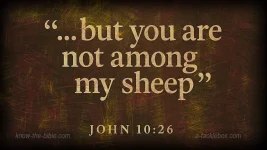
Jesus said plainly in John 10:26, “But ye believe not, because ye are not of my sheep, as I said unto you.” These are not the words of a motivational speaker or a gentle religious guru, they are the words of the Lord Himself, dividing between those who truly belong to Him and those who do not. Many claim belief, yet Scripture makes it clear, not all belief is saving faith. The line Jesus draws here is sharp. It reveals that real faith goes far deeper than mental agreement or emotional excitement. It is about belonging to Him.

In John 3:15-16, Jesus promises eternal life to those who believe in Him. But the kind of belief He speaks of is not casual acknowledgment. It is a personal trust, a complete surrender to the One lifted up like the serpent in the wilderness, crucified for the sins of the world. This kind of belief changes everything. It is not intellectual curiosity or admiration for His miracles. In fact, John 6:23-26 shows us that many followed Jesus simply because they wanted more bread. They had seen the miracles, they had been amazed, but they were not drawn to Him, they were drawn to what He could give them.

Others saw Jesus as a political solution, a possible liberator from Rome. Mark 15:32 records the mockery of the crowd, “Let Christ the King of Israel descend now from the cross, that we may see and believe.” They wanted a Messiah on their terms, a powerful ruler who would crush their enemies, not a suffering servant who would die for their sins. They believed in a version of Jesus, but not the one sent by the Father. They did not recognize Him because their hearts were not His. They were not His sheep.

This is why Galatians 1:3-4 and Philippians 2:5-8 are so vital. They remind us who the true Jesus is. He gave Himself for our sins, that He might deliver us from this present evil world. He made Himself of no reputation, humbling Himself to the point of death on a cross. This is the Jesus we must believe in, not a mascot for our political ideals, not a genie who fixes our problems, but the Lamb of God who takes away the sin of the world.

Many today still fall into the same trap. They believe in a Jesus of their own imagination, a Christ made in their image, one who tolerates sin, affirms their desires, and requires no repentance. But Jesus said, “My sheep hear my voice, and I know them, and they follow me” (John 10:27). Saving faith is marked by submission, trust, and obedience. It is to believe in the Jesus of Scripture, and to follow Him wherever He leads.

So ask yourself, do you believe in Jesus because of what He can do for you, or because of who He truly is? If He leads you through suffering, persecution, or hardship, will you still follow? If not, then maybe the problem is not with your faith, it is that you may not be one of His sheep.

But the good news is this, Jesus is still calling. And all who hear His voice and come to Him in repentance and faith will be saved. Not by works, not by heritage, but by grace. Believe in the true Christ, the crucified, risen, and returning King. Anything less is not saving faith. It is a counterfeit. And eternity is too high a price to gamble on the wrong Jesus.
 

Attachments

  • my-sheep.webp
    my-sheep.webp
    120.2 KB · Views: 0
Is following God also OK?
No, because you cannot “follow” “God” apart from Jesus Christ, because Scripture does not present God apart from Jesus Christ.

The Bible is clear on this point. Jesus is not a representative of God you can choose not to follow. He is God made known. “In the beginning was the Word, and the Word was with God, and the Word was God… And the Word was made flesh” ~John 1:1,14. To speak of following God while ignoring Jesus is not biblical faith. It is unbelief.

Jesus made this a non-negotiable issue. “He that honoureth not the Son honoureth not the Father which hath sent him” ~John 5:23. You cannot say you are following God while discrediting, reinterpreting, or separating God from His Son. Scripture explicitly says you cannot.

John makes this point even more clearly. “Whosoever denieth the Son, the same hath not the Father” ~1 John 2:23. There is no provision in the Bible for following God without following Christ. None at all.

Jesus did not teach that He provides a way to know God. He said He is the way. “No man cometh unto the Father, but by me” ~John 14:6. Period.

If someone comes along and says they are “following God” while at the same time they are distancing themselves from Jesus, they are not merely presenting a wider faith. They are presenting an altogether different faith. Scripture says not to do that quite plainly. “If any man preach any other gospel… let him be accursed” ~Galatians 1:8.

So let’s be perfectly clear for the sake of anyone reading. Jesus is not one path to God. He is God the Son. To reject Jesus is to reject God. To redefine Jesus is to follow a false god. Jesus is God.

This is not a matter of semantics. This is eternal truth.
 
Is following God also OK?

Good morning, Jack;

When we're following Jesus we are following God.

John 14:6, 5 Thomas said to him, “Lord, we don’t know where you are going, so how can we know the way?” 6 Jesus answered, “I am the way and the truth and the life. No one comes to the Father except through me. 7 If you really know me, you will know my Father as well. From now on, you do know him and have seen him.” - NIV

Moses will attest to God's Ways and could not fathom what God was capable of all during the Exodus. Moses long journey and relationship with God including sending the future Messiah, the Deliverer as the seed of woman in Genesis 3:15 and later when Mose announced in Deuteronomy 18:15-19,

15 “The Lord your God will raise up for you a prophet like me from among you, from your brethren—him you shall heed— 16 just as you desired of the Lord your God at Horeb on the day of the assembly, when you said, ‘Let me not hear again the voice of the Lord my God, or see this great fire any more, lest I die.’ 17 And the Lord said to me, ‘They have rightly said all that they have spoken. 18 I will raise up for them a prophet like you from among their brethren; and I will put my words in his mouth, and he shall speak to them all that I command him. 19 And whoever will not give heed to my words which he shall speak in my name, I myself will require it of him.
- RSV

I always invite God to join my wife and me wherever we go and do, and Jesus is always included while carrying us both through it all.

God bless
you, Jack and your entire family.

Bob
 
Last edited:
People are confused about who is God.

God is not a carpenter. The God who created the heaven and the earth, the God of Abraham, Isaac and Jacob, that is Y-H-W-H.

Link removed for false teaching.
 
People are confused about who is God.

God is not a carpenter. The God who created the heaven and the earth, the God of Abraham, Isaac and Jacob, that is Y-H-W-H.
Scripture has already answered this point, so I will not restate what has been said. Your assertion fails because it ignores what God Himself later revealed about Himself. The Old Testament does not end the definition of who YHWH is. God continues to speak. Hebrews 1:1–2 says that God, who spoke in times past through the prophets, has in these last days spoken unto us by His Son. That is not a different God. That is the same God revealing Himself more fully.

Isaiah 9:6 says the child born would be called “Mighty God” and “Everlasting Father.” Micah 5:2 says the Messiah would come forth from Bethlehem yet be “from everlasting.” These are not carpenter myths. These are YHWH’s own words about the One He would send.

The issue is not confusion about who God is. The issue is refusal to accept how God chose to reveal Himself. Scripture warns plainly, “He that abideth not in the doctrine of Christ, hath not God” ~2 John 9. That is decisive.

This thread is about the real Jesus versus a counterfeit. Any version of God that excludes, diminishes, or distances itself from Jesus Christ is not the God Scripture reveals. That is not an insult. That is simply what the text says.

The matter has been answered by Scripture. It does not need redefining.
 
Link removed for false teaching.
For clarity going forward, links that promote teaching contrary to the plain teaching of Scripture are not permitted here.

This forum is governed by the Word of God, not by outside materials that deny, redefine, or separate what Scripture joins together. We are not here to host alternate gospels or sources that contradict what the Bible plainly teaches about God and Christ. Scripture warns directly against this. “If there come any unto you, and bring not this doctrine, receive him not into your house, neither bid him God speed” ~2 John 10. That applies to teachings and to the materials that promote them.

You are welcome to discuss Scripture itself. You are not free to post links that undermine the truth of Scripture. This is not censorship. It is biblical discernment.

Consider this your notice so there is no confusion going forward.
 
People are confused about who is God.

God is not a carpenter. The God who created the heaven and the earth, the God of Abraham, Isaac and Jacob, that is Y-H-W-H.

Link removed for false teaching.

Hello Jack;

God is not referred to as a carpenter. He is our Creator of the Heavens and the Earth, our God of Abraham, Isaac and Jacob, thus Y-H-W-H. Scripture has already made this inerrantly Biblical.

His only begotten Son, Jesus, during His earthly mission was a tekton (Greek,) "carpenter" or metaphor for "a builder" - a "Spiritual building," "living stones" or "Kingdom of God."

Mark 6:3, 3 Is not this the carpenter, the son of Mary and brother of James and Joses and Judas and Simon? And are not his sisters here with us?” And they took offense at him. - ESV

Matthew 13:55, 55 Is not this the carpenter’s son? Is not his mother called Mary? And are not his brothers James and Joseph and Simon and Judas? - RSV

This was not a compliment but a lowly statement made by those who didn't believe, therefore could not grasp the Christ.

God bless you, Jack.

Bob
 
Isaiah 9:6 says the child born would be called “Mighty God” and “Everlasting Father.”
Isaiah 9:2-7 "2 The people who walked in darkness have seen a great light; those who dwelt in a land of deep darkness, on them has light shined. 3 Thou hast multiplied the nation, thou hast increased its joy; they rejoice before thee as with joy at the harvest, as men rejoice when they divide the spoil. 4 For the yoke of his burden, and the staff for his shoulder, the rod of his oppressor, thou hast broken as on the day of Mid'ian. 5 For every boot of the tramping warrior in battle tumult and every garment rolled in blood will be burned as fuel for the fire. 6 For to us a child is born, to us a son is given; and the government will be upon his shoulder, and his name will be called "Wonderful Counselor, Mighty God, Everlasting Father, Prince of Peace". 7 Of the increase of his government and of peace there will be no end, upon the throne of David, and over his kingdom, to establish it, and to uphold it with justice and with righteousness from this time forth and for evermore. The zeal of the LORD of hosts will do this."

Please take notice of the fact that Isaiah is talking in the past tense: "The people who walked in darkness have seen a great light; those who dwelt in a land of deep darkness, on them has light shined.|


"For to us a child is born, to us a son is given; and the government is upon his shoulder, and his name was called "Wonderful Counselor, Mighty God, Everlasting Father, Prince of Peace."


These are things which had happened already in the days of Isaiah.


If, despite these facts, you still want to apply these verses to JC, than read verse 5, 6, and 7, and see that JC didn't do any of those things. He never ruled on the throne of David, he never had any government on his shoulders, and there never was endless peace over his kingdom.


The same holds true for the verses 6 and 7: "For to us a child is born, to us a son is given; and the government will be upon his shoulder, and his name will be called "Wonderful Counselor, Mighty God, Everlasting Father, Prince of Peace". 7 Of the increase of his government and of peace there will be no end, upon the throne of David, and over his kingdom, to establish it, and to uphold it with justice and with righteousness from this time forth and for evermore. The zeal of the LORD of hosts will do this."


All of this doesn't hold true for JC; he never had any government on his shoulder. And also here is spoken in the past tense: "A child is born, a son is given. But most translations give it in the future tense. For instance the RSV, NIV, NAS, ESV, KJV, NIRV, the all say; "His name will be called ....", future tense. However, in the Hebrew text this too is past tense: "His name was called ...." The Hebrew expression here is "wayikra". That is the first word in the book of Leviticus. And all the previously mentioned translations there say: "And the Lord called Mozes ..." Past tense. Exactly the same the word. Isn't that weird? Exactly the same word is used in Genesis 5:1; "And God called the light 'day'" Called. Past tense. Nobody argues with that one. But why then, in Isaiah 9, is it suddenly changed to future tense? The answer is simple: The past tense doesn't fit with the Christian theology, and therefore the Bible translations are corrupted and twisted to fit the Christian religion. Just like that. There is only one solution for this problem: Take a course in Biblical Hebrew. It is more easy then it looks. Then your eyes will be opened and the Christian deception will stare you in the face. And yes, I do sympathize with the poor misguided Christians whom are being led astray by their clergy by means of twisted and corrupted Bible translations. That's the reason why I fulfill my duty of being a light unto the nations and uncovering the Christian deception.

"Of the increase of his government and of peace there will be no end" "There will be no end", future tense. And this too is WRONG. It is in the Hebrew present tense. I found only one translation which is correct here, and that is Young's Literal Translation.


Why all this stress on the tenses? Isaiah spoke about a king who was living in his days, and therefore JC is out. The king that Isaiah speaks about is Hezekiah, the son of Achaz who got from Isaiah the sign about the young woman (no, not the virgin) who was pregnant and gave birth to the son Immanuel.

The Talmud explains that under the rule of the God fearing Hezekiah the Jewish kingdom rose to great heights, and that's why he was entitled to those impressive titles.


Because of the fact that the name of the son is "Mighty God", (or "God is Mighty", both are possible translations) and "Eternal Father", the Christians deduce that the boy spoken about must have been God.

HOWEVER, a name is only that; a name. A name is not a description of the bearer of that name. An example: Buffalo Bill was not a buffalo. The indian chief Sitting Bull was not a bull.

Many times people in the Bible have in their name the word "God", or the name of God, but that doesn't mean that those people are God. For instance; in Exodus 6:23 is spoken about a man called "Elazar". That means "God is a helper", or "Helping God". But that doesn't mean that that man was God.

Exodus 6:24; "Elkanah", that means "God acquired", or "acquiring God". II Samuel 22:19; "Elchanan"; "God is merciful", or "Merciful God". But these men were not God, just like the the child in Isaiah 9 wasn't God.


Apart from that, the Hebrew words "El gibor", in Christian Bibles translated with "Mighty God", can have a different meaning. "El" can mean "God", but it can also mean "judge", "leader", or "mighty man". In Exodus 4:16 God says to Moses that he will be of an elohiem for his brother Aharon. ("elohim" is the longer form of the word "el") This doesn't mean that Moses was a God for Aharon and Aharon started to worship his brother, it meant that Moses would be the leader of Aharon.

In Exodus 21:1-6 is spoken about a slave who after the normal period of servitude ended, doesn't want to leave his master. In that case the owner has to take him to court, where the slave will make a statement that he doesn't want to leave his master, and that he will serve his master until his death. The Hebrew text there says that his master must take him to the "elohim". There the NAS, ASV, ESV, NRSV, RSV, YLT, they all say that his master must take him "to God". However, his master doesn't take him for a ride to heaven, but takes him to the courthouse. Therefore the NIV, KJV, TNIV, and the NIRV, they all say that the master must take him to "the judges".


Even so in Isaiah 9 the word "El" does not necessarily mean "God". Therefore the text in Isaiah 9 is in no way a proof that the child spoken about was God.
 
For clarity going forward, links that promote teaching contrary to the plain teaching of Scripture are not permitted here.

This forum is governed by the Word of God, not by outside materials that deny, redefine, or separate what Scripture joins together. We are not here to host alternate gospels or sources that contradict what the Bible plainly teaches about God and Christ. Scripture warns directly against this. “If there come any unto you, and bring not this doctrine, receive him not into your house, neither bid him God speed” ~2 John 10. That applies to teachings and to the materials that promote them.

You are welcome to discuss Scripture itself. You are not free to post links that undermine the truth of Scripture. This is not censorship. It is biblical discernment.

Consider this your notice so there is no confusion going forward.
Please explain what part of my link was Biblically incorrect.

Are you denying that Y-H-W-H is God?
 
Micah 5:2 says the Messiah would come forth from Bethlehem yet be “from everlasting.”
Micah 5:2
New American Standard Bible "But as for you, Bethlehem Ephrathah, Too little to be among the clans of Judah, From you One will go forth for Me to be ruler in Israel His goings forth are from long ago, From the days of eternity."

Holman Christian Standard Bible " Bethlehem Ephrathah, you are small among the clans of Judah; One will come from you to be ruler over Israel for Me. His origin is from antiquity, from eternity.

New Life Version "His coming was planned long ago, from the beginning."

Darby Translation "whose goings forth are from of old, from the days of eternity."

American Standard Version "whose goings forth are from of old, from everlasting."

All versions of the King James: "whose goings forth have been from of old, from everlasting."

Amplified Bible "Whose goings forth have been from of old, from ancient days (eternity).


All the above translation say the origins of the messiah are from "everlasting" or from "eternity", hereby implying that the messiah is God.
The Hebrew words here translated with "from everlasting" or "days of eternity" are "yamei olaam", which means literally "ancient days".
Many Bible translations translate it like that, only the above hold on to "days of eternity", or something with the same implications, with which they imply that the messiah is God himself.

However, also the above translations know how to correctly translate the words "yamei olaam". We see that for instance in Micah 7:14, were the same expression "yamei olaam" is used. See here how the above translate it there:

Holman Christian Standard Bible " Let them graze in Bashan and Gilead as in ancient times."

New Life Version "Let them eat in Bashan and Gilead as in days long ago."

Darby Translation "let them feed in Bashan and Gilead, as in the days of old. "

American Standard Version "let them feed in Bashan and Gilead, as in the days of old."

King James: "let them feed in Bashan and Gilead, as in the days of old."

New American Standard Bible "Let them feed in Bashan and Gilead As in the days of old."

Amplified Bible "they shall feed in Bashan and Gilead, as in the days of old."


Another place where the expression "yamei olaam" is used, is in Isaiah 63:11

Holman Christian Standard Bible " Then He remembered the days of the past, [the days] of Moses [and] his people."

New Life Version "Then His people remembered the days long ago, the days of Moses."

Darby Translation "But he remembered the days of old, Moses [and] his people:"

American Standard Version "Then he remembered the days of old, Moses and his people,"

King James: "Then he remembered the days of old, Moses, and his people,"

New American Standard Bible "Then His people remembered the days of old, of Moses"

Amplified Bible "Then His people [seriously] remembered the days of old, of Moses and his people"


Another place where the expression "yamei olaam" is used is Amos 9:11

Holman Christian Standard Bible "In that day I will restore the fallen booth of David: I will repair its gaps,
restore its ruins, and rebuild it as in the days of old,"

New Life Version "In that day I will build again the tent of David that fell down. Yes, I will build it again from the stones that fell down. I will set it up again as it used to be."

Darby Translation "and I will raise up its ruins, and I will build it as in the days of old:"

American Standard Version "and I will raise up its ruins, and I will build it as in the days of old;"

King James: "and I will raise up his ruins, and I will build it as in the days of old:"

Amplified Bible "and I will raise up its ruins, and I will build it as in the days of old,"

New American Standard Bible "I will also raise up its ruins And rebuild it as in the days of old;"


Another place where the expression "yamei olaam" is used is in Malachi 3:4

Holman Christian Standard Bible "And the offerings of Judah and Jerusalem will please the LORD as in days of old and years gone by"

New Life Version "Then the gifts of Judah and Jerusalem will be pleasing to the Lord, as they were in the past."

Darby Translation "Then shall the oblation of Judah and Jerusalem be pleasant unto J-e-h-o-v-a-h, as in the days of old, and as in former years."

American Standard Version "Then shall the offering of Judah and Jerusalem be pleasant unto J-e-h-o-v-a-h, as in the days of old, and as in ancient years. "

King James: "Then shall the offering of Judah and Jerusalem be pleasant unto the LORD, as in the days of old, and as in former years."

Amplified Bible "hen will the offering of Judah and Jerusalem be pleasing to the Lord as in the days of old and as in ancient years."

New American Standard Bible ""Then the offering of Judah and Jerusalem will be pleasing to the LORD as in the days of old and as in former years."

It should be clear by now for everybody that the expression "yamei olaam" has no bearing on "days of eternity".
It is always translated correct, except there where it speaks about the messiah, and so the illusion is created that messiah must be God.
 
The Talmud explains that under the rule of the God fearing Hezekiah the Jewish kingdom rose to great heights, and that's why he was entitled to those impressive titles.
This argument collapses under Scripture itself, not under Christian theology. First, your entire case rests on tense-policing, but the Bible itself uses what scholars call the prophetic perfect. Scripture routinely speaks of future acts of God as accomplished facts because His decree is certain. Isaiah does this constantly. For example, Isaiah 53 speaks of the Servant’s suffering entirely in past tense, yet you do not claim the Servant had already been crucified in Isaiah’s day. The tense does not determine timing. The context does.

Second, Scripture itself applies Isaiah 9:1–2 to Jesus Christ explicitly. Matthew says, quoting this very passage, “that it might be fulfilled which was spoken by Esaias the prophet” and applies it to Jesus’ ministry in Galilee ~Matthew 4:14–16. You do not get to claim Isaiah 9 refers only to Hezekiah when inspired Scripture applies it to Christ.

Third, your claim that the throne language disqualifies Jesus ignores the Bible’s own explanation. Scripture teaches that Jesus is the heir of David’s throne, but His reign unfolds in stages. The angel said to Mary that the Lord God would give Him “the throne of his father David” and that His kingdom would have no end ~Luke 1:32–33. Peter preached that Jesus was raised to sit on David’s throne ~Acts 2:30–36. The New Testament does not deny the throne. It explains it.

Fourth, the name El Gibbor cannot be reduced to “mighty man” in Isaiah 9 without breaking Isaiah’s own usage. The very same prophet uses El Gibbor unmistakably for YHWH Himself in Isaiah 10:21, saying the remnant will return “unto the mighty God.” Same words. Same prophet. Same meaning. Scripture interprets Scripture.

Fifth, your appeal to name usage misses the point. Isaiah does not say the child merely has a name containing God. He says the child is called Mighty God and Everlasting Father. Isaiah never applies those titles together to any merely human king. Hezekiah is never called Everlasting Father anywhere in Scripture. That title belongs to God alone, who says, “I am the LORD, I change not” ~Malachi 3:6.

Sixth, appealing to the Talmud settles nothing. The Talmud is not Scripture. This forum stands on the Word of God alone.

Finally, Scripture itself closes the door on your conclusion. Isaiah says this ruler’s kingdom will be upheld “from henceforth even for ever” by the zeal of YHWH. No king in Isaiah’s day meets that description. Scripture does not bend to historical convenience.

The issue here is not corrupted translations or Christian deception. The issue is refusing the Bible’s own testimony about the Messiah. Jesus fits Isaiah 9 precisely because He is not merely a king of Judah, but the eternal King revealed in time.

The text does not fail. Your conclusion does.
 
It should be clear by now
You are not wrestling with Hebrew. You are wrestling with what God has said about His Christ. You keep insisting that if a phrase can sometimes mean “ancient,” then it must always mean “ancient,” as though God is bound to your preferred minimum definition. Scripture does not work that way. Words have range, and God Himself defines the range by context. The issue is not what yāmê ʿôlām can mean in isolation. The issue is what it must mean here given what is being described.

Micah does not say this ruler merely descends from an ancient lineage. He says his goings forth are from of old. Not his ancestry. Not his royal line. His activity. His going out. His existence in purpose and action before Bethlehem. That language is never used of ordinary kings.

Then Micah tells you what kind of ruler this is. He will stand and shepherd “in the strength of the LORD, in the majesty of the name of the LORD his God,” and he will be great to the ends of the earth ~Micah 5:4. No king in Israel’s past meets that description. Not David. Not Hezekiah. Not anyone. You are trying to squeeze an eternal ruler into a temporary box because you refuse the conclusion Scripture presses.

And this is where the heart of the issue shows itself. You appeal to Isaiah, Micah, and Hebrew grammar, but you refuse to listen when Scripture explains itself later. The same God who spoke through Micah spoke through the apostles. If you reject that, then do not pretend this is about fidelity to the Bible. It is about controlling the outcome.

Jesus said, “Before Abraham was, I am” ~John 8:58. Not I was planned. Not I was foreseen. I am. And the Jews knew exactly what He meant, because they picked up stones. They did not accuse Him of bad grammar. They accused Him of blasphemy.

You say Micah cannot mean what Christians say it means. Scripture says Christ came forth in time, yet existed before time. “In the beginning was the Word” ~John 1:1. “He is before all things” ~Colossians 1:17. “Whose goings forth are from of old” is not a problem text. It is a witness.

What you are really doing is this. You are willing to let God speak until He says something that costs you your conclusion. Then suddenly the text must be restrained, redefined, and domesticated. That is not submission. That is resistance dressed up as scholarship.

God has not stuttered. He has spoken plainly. The Messiah is born in Bethlehem. His reign is eternal. His origin is not merely ancient. It is beyond time itself. If that offends you, the offense is not created by Christian translators. It is created by the Word of God.

The question is not whether the Hebrew allows it. The question is whether you will allow God to be who He says He is.
 
View attachment 5

Jesus said plainly in John 10:26, “But ye believe not, because ye are not of my sheep, as I said unto you.” These are not the words of a motivational speaker or a gentle religious guru, they are the words of the Lord Himself, dividing between those who truly belong to Him and those who do not. Many claim belief, yet Scripture makes it clear, not all belief is saving faith. The line Jesus draws here is sharp. It reveals that real faith goes far deeper than mental agreement or emotional excitement. It is about belonging to Him.

In John 3:15-16, Jesus promises eternal life to those who believe in Him. But the kind of belief He speaks of is not casual acknowledgment. It is a personal trust, a complete surrender to the One lifted up like the serpent in the wilderness, crucified for the sins of the world. This kind of belief changes everything. It is not intellectual curiosity or admiration for His miracles. In fact, John 6:23-26 shows us that many followed Jesus simply because they wanted more bread. They had seen the miracles, they had been amazed, but they were not drawn to Him, they were drawn to what He could give them.

Others saw Jesus as a political solution, a possible liberator from Rome. Mark 15:32 records the mockery of the crowd, “Let Christ the King of Israel descend now from the cross, that we may see and believe.” They wanted a Messiah on their terms, a powerful ruler who would crush their enemies, not a suffering servant who would die for their sins. They believed in a version of Jesus, but not the one sent by the Father. They did not recognize Him because their hearts were not His. They were not His sheep.

This is why Galatians 1:3-4 and Philippians 2:5-8 are so vital. They remind us who the true Jesus is. He gave Himself for our sins, that He might deliver us from this present evil world. He made Himself of no reputation, humbling Himself to the point of death on a cross. This is the Jesus we must believe in, not a mascot for our political ideals, not a genie who fixes our problems, but the Lamb of God who takes away the sin of the world.

Many today still fall into the same trap. They believe in a Jesus of their own imagination, a Christ made in their image, one who tolerates sin, affirms their desires, and requires no repentance. But Jesus said, “My sheep hear my voice, and I know them, and they follow me” (John 10:27). Saving faith is marked by submission, trust, and obedience. It is to believe in the Jesus of Scripture, and to follow Him wherever He leads.

So ask yourself, do you believe in Jesus because of what He can do for you, or because of who He truly is? If He leads you through suffering, persecution, or hardship, will you still follow? If not, then maybe the problem is not with your faith, it is that you may not be one of His sheep.

But the good news is this, Jesus is still calling. And all who hear His voice and come to Him in repentance and faith will be saved. Not by works, not by heritage, but by grace. Believe in the true Christ, the crucified, risen, and returning King. Anything less is not saving faith. It is a counterfeit. And eternity is too high a price to gamble on the wrong Jesus.
I have noticed your forum is not very active @David ?

Johann here from Crosswalk.

J.
 
I have noticed your forum is not very active @David ?

Johann here from Crosswalk.
Exactly. BTF is new and just getting started. New ground always takes time.

Scripture never treats growth as instant or guaranteed. Paul said, “I have planted, Apollos watered; but God gave the increase” ~1 Corinthians 3:6. Planting always comes before visibility.

If God chooses to bring people, He will. If He chooses to keep it small, that is His business too. Faithfulness comes first. Fruit comes when and how the Lord decides.

Truth does not need momentum to be true. It only needs to be taught plainly and without compromise.
 
I have noticed your forum is not very active @David ?

Johann here from Crosswalk.

J.
So right! We are waiting for people such as yourself, to interact : )
Blessings Linda
PS what or where is "Crosswalk"?
 
Last edited:
People are confused about who is God.

God is not a carpenter. The God who created the heaven and the earth, the God of Abraham, Isaac and Jacob, that is Y-H-W-H.

Link removed for false teaching.
Hi Jack,
I too was pretty confused by "God" ... God The Father, God the Son and God the Holy Spirit ... this caused me a few years of confusion and discomfort especially in not knowing who to pray to. I was back and forth with this, praying to God (The Father) and to Jesus, separately. I also felt that I was leaving Holy Spirit out, who spreaks to us as Christians, and guides us along our ways (He will even rejuvenate our spirits whilst we sleep, if we ask Him to). The more we learn about Scripture (unadulterated), the more peace we gain. I also used to think there were "contradictions" in Scripture ... David has taught me so much. Stick around, open your heart and mind (pray to The Father to help you with this) ... in a short period of time, maybe six months, I have learned more than with any other group or forum. Sometimes it is heavy going, and I have to read the question and the answers over and over again (this is called Bible Study). All the best, and hope we see you around more often. Keep asking questions, and be ready for the Truth : ) Blessings, Linda
 
Exactly. BTF is new and just getting started. New ground always takes time.

Scripture never treats growth as instant or guaranteed. Paul said, “I have planted, Apollos watered; but God gave the increase” ~1 Corinthians 3:6. Planting always comes before visibility.

If God chooses to bring people, He will. If He chooses to keep it small, that is His business too. Faithfulness comes first. Fruit comes when and how the Lord decides.

Truth does not need momentum to be true. It only needs to be taught plainly and without compromise.
Such a Wonderful way of looking at BTF ... Thank You for all your hard work David, even if it is for but a few of us ... I do not know what I would do without your and Bob's inputs : ) xxx
 
You are not wrestling with Hebrew. You are wrestling with what God has said about His Christ. You keep insisting that if a phrase can sometimes mean “ancient,” then it must always mean “ancient,” as though God is bound to your preferred minimum definition. Scripture does not work that way. Words have range, and God Himself defines the range by context. The issue is not what yāmê ʿôlām can mean in isolation. The issue is what it must mean here given what is being described.
Bs"d

Please explain what it must mean here and why.
Micah does not say this ruler merely descends from an ancient lineage. He says his goings forth are from of old. Not his ancestry. Not his royal line. His activity. His going out.
The word is a noun, not a verb. So no activity. It means his origin, his ancestral line.

His existence in purpose and action before Bethlehem. That language is never used of ordinary kings.

Then Micah tells you what kind of ruler this is. He will stand and shepherd “in the strength of the LORD, in the majesty of the name of the LORD his God,” and he will be great to the ends of the earth ~Micah 5:4. No king in Israel’s past meets that description. Not David. Not Hezekiah. Not anyone.
Also your messiah does not meet that description. Nobody does. Because the messiah didn't come yet.

Jesus said, “Before Abraham was, I am” ~John 8:58. Not I was planned. Not I was foreseen. I am. And the Jews knew exactly what He meant, because they picked up stones. They did not accuse Him of bad grammar. They accused Him of blasphemy.
Everybody can claim to be God or the messiah. That doesn't make them God or the messiah.

How do we know that the messiah is the messiah? By the fact that he fulfills the messianic prophecies.

JC did not fulfill the messianic prophecies, therefore he is not the messiah.
God has not stuttered. He has spoken plainly. The Messiah is born in Bethlehem. His reign is eternal. His origin is not merely ancient. It is beyond time itself.
You can believe that the messiah is from beyond time itself. Just don't think it is written in Micha 5, because it isn't.
 
Bs"d

Please explain what it must mean here and why.

The word is a noun, not a verb. So no activity. It means his origin, his ancestral line.


Also your messiah does not meet that description. Nobody does. Because the messiah didn't come yet.


Everybody can claim to be God or the messiah. That doesn't make them God or the messiah.

How do we know that the messiah is the messiah? By the fact that he fulfills the messianic prophecies.

JC did not fulfill the messianic prophecies, therefore he is not the messiah.

You can believe that the messiah is from beyond time itself. Just don't think it is written in Micha 5, because it isn't.
You keep trying to shrink the verse until it fits a merely human figure. The text refuses to shrink.

Micah does not say the Messiah’s family is ancient. It says the ruler Himself has “goings forth… from everlasting” ~Micah 5:2. If God meant ancestry He already had clear words for that all over Scripture, “son of David,” “house of Jesse.” But here the focus is the person, not the pedigree.

And the Spirit closes the escape door by adding “from everlasting.” The same language used of God: “from everlasting to everlasting, thou art God” ~Psalm 90:2. You can argue with me, but now you are arguing with how Scripture uses its own words.

Then look at what this ruler does. He shepherds in the LORD’s own strength and becomes great “unto the ends of the earth” ~Micah 5:4. No king of Israel ever ruled the ends of the earth. Not David. Not Solomon. So either the prophecy failed or you are looking for a ruler bigger than a man.

You say the Messiah has not come because no one fulfilled the prophecies. Yet the same prophets say the Messiah would first be rejected: “he is despised and rejected of men” ~Isaiah 53:3, and then later reign. Scripture gives suffering first, glory after. Refusing the first coming because the kingdom is not yet visible is rejecting half the prophecy.

Then Jesus speaks: “Before Abraham was, I am” ~John 8:58. The hearers picked up stones because they knew He was taking the divine name. They did not hear a teacher claiming ancestry. They heard a man claiming eternity.

So this is no longer a grammar discussion. It is a submission discussion. The question is simple. When God describes a ruler born in Bethlehem whose origin is everlasting and whose reign reaches the ends of the earth, do you let the text define the Messiah, or do you redefine the Messiah to avoid the One who came?

The prophets gave marks so Israel would recognize Him, not endlessly postpone Him. Rejecting the One who matches the description does not protect the prophecy. It fulfills another one: “the stone which the builders rejected is become the head of the corner” ~Psalm 118:22.
 
You keep trying to shrink the verse until it fits a merely human figure. The text refuses to shrink.

Micah does not say the Messiah’s family is ancient. It says the ruler Himself has “goings forth… from everlasting” ~Micah 5:2.
As I have shown in post 12 in this thread, the words "yamei olam" do not mean "from everlasting".

There is no such thing in Micah 5:2.

Then look at what this ruler does. He shepherds in the LORD’s own strength and becomes great “unto the ends of the earth” ~Micah 5:4. No king of Israel ever ruled the ends of the earth. Not David. Not Solomon. So either the prophecy failed or you are looking for a ruler bigger than a man.
The prophecy didn't fail, it is just not yet fulfilled, because the messiah didn't come yet.
You say the Messiah has not come because no one fulfilled the prophecies. Yet the same prophets say the Messiah would first be rejected: “he is despised and rejected of men” ~Isaiah 53:3, and then later reign. Scripture gives suffering first, glory after. Refusing the first coming because the kingdom is not yet visible is rejecting half the prophecy.
Isaiah 53 does not speak about the messiah. It speaks about the Jewish people.

There is not the slightest indication, let alone any proof, that Isaiah 53 speaks about the messiah.
Then Jesus speaks: “Before Abraham was, I am” ~John 8:58. The hearers picked up stones because they knew He was taking the divine name. They did not hear a teacher claiming ancestry. They heard a man claiming eternity.
Like I said before: Everybody can claim to be God or the messiah. That doesn't mean that they are God or the messiah.
 
As I have shown in post 12 in this thread, the words "yamei olam" do not mean "from everlasting".

There is no such thing in Micah 5:2.


The prophecy didn't fail, it is just not yet fulfilled, because the messiah didn't come yet.

Isaiah 53 does not speak about the messiah. It speaks about the Jewish people.

There is not the slightest indication, let alone any proof, that Isaiah 53 speaks about the messiah.

Like I said before: Everybody can claim to be God or the messiah. That doesn't mean that they are God or the messiah.
You have been shown the passages and you keep resetting to the same denial without answering them.

Isaiah 53 describes one innocent servant bearing the sins of others ~Isaiah 53:6,9.
Micah says the ruler is born in Bethlehem yet his origins are “from everlasting” ~Micah 5:2.
Jesus says “Before Abraham was, I am” and they move to execute Him for blasphemy ~John 8:58-59.
God then confirms Him by the resurrection ~Romans 1:4.

You have not dealt with the texts. You have only repeated, “that doesn’t mean Messiah” and “anyone can claim.” That is not interpretation, it is refusal.

So this will not be repeated again. Either answer the Scriptures directly or acknowledge you are rejecting what they say.
 
As I have shown in post 12 in this thread, the words "yamei olam" do not mean "from everlasting". There is no such thing in Micah 5:2. The prophecy didn't fail, it is just not yet fulfilled, because the messiah didn't come yet. Isaiah 53 does not speak about the messiah. It speaks about the Jewish people. There is not the slightest indication, let alone any proof, that Isaiah 53 speaks about the messiah. Like I said before: Everybody can claim to be God or the messiah. That doesn't mean that they are God or the messiah.

Hello Jack Horsefork;

I can discern your love for God and are a faithful disciple of Judaism or Messianic Judaism.

I'm a partner / brother in Christ with
Jews for Jesus and the International Fellowship of Christians and Jews for well over 30 years. This is not a humble brag but a serious praise to God. Many cannot say they have Godly brothers and sisters across the miles. My wife and I have been blessed immensely by God Almighty with these friends.

From my understanding of what you're discussing is discipline of the Mitzvah, or instructional study on a daily basis.

Though I'm not an avid student of the Mitzvah I aim more to be a disciple of the Bible but with
a listening ear. I feel there is a difference between a Christian disciple of the Bible and a Judaism student of the Mitzvah. There will be definitive differences in the Bible, Torah, the doctrine of God, His only beloved Son and the profound teaching of salvation.

In other words there is a fundamental difference between the Mitzvah and Sola Scriptura, which is the core teaching here at Biblical Truth Forum. The key is, how can we arrive at an understanding of common ground.

If you feel what I'm sharing / defining is in error, then that's on me, therefore,
Jack, please leave out the debate for we're getting ahead of ourselves, and instead clarify what you are conveying from your studies and belief in this thread to help me understand?

God bless
you, Jack, and your entire family.

Bob
 
1. Bs"d

Please explain what it must mean here and why.

2. The word is a noun, not a verb. So no activity. It means his origin, his ancestral line.


3. Also your messiah does not meet that description. Nobody does. Because the messiah didn't come yet.


4. Everybody can claim to be God or the messiah. That doesn't make them God or the messiah.

5. How do we know that the messiah is the messiah? By the fact that he fulfills the messianic prophecies.

6. JC did not fulfill the messianic prophecies, therefore he is not the messiah.

7. You can believe that the messiah is from beyond time itself. Just don't think it is written in Micha 5, because it isn't.
Hi Jack,
Forgive me if I am wrong ... do I detect an attitude of "attack" ... I am trying to understand your questions.
1. What does Bs"d mean?
2. not sure what you mean with your second question?
3. a. why do you think that Our Messiah does not meet the description (quoted scripture by David: Micha 5:4)?
3. b. you say "your Messiah" ... do you believe in Jesus Christ and the Father?
3.c. what is your religion?
4. who do you think they are referring to here?
5. what are your thoughts (answer) to your question?
6. could clarify this? what scriptural evidence makes you say this?
7. have you read the whole Bible and do you understand it all ... because it is written!?

John 1:1 explicitly states that Jesus was in the beginning: "In the beginning was the Word, and the Word was with God, and the Word was God." This verse identifies the Word (Jesus) as existing eternally before creation, echoing the opening of Genesis 1:1. The Greek phrase "en archē" ("in the beginning") is identical to the first words of Genesis, emphasizing that Jesus existed before time, space, and matter were created.
Hope to hear more from you : )
 
Hi Jack,
Forgive me if I am wrong ... do I detect an attitude of "attack" ... I am trying to understand your questions.
Bs"d
Sometimes I'm a bit over-aggressive. Nothing personal, no bad intentions, just the nature of the person.
1. What does Bs"d mean?
Bs"d

The above is an abbreviation of the Aramaic expression "Ba siata desmaya", and that means: "With the help of Heaven".

Besiyata Dishmaya - Wikipedia
2. not sure what you mean with your second question?
I don't know what you mean by my second question. Please post it here.
3. a. why do you think that Our Messiah does not meet the description (quoted scripture by David: Micha 5:4)?
Micha 5:2-9; "But thou Bethlehem Ephratah, though thou be little among the thousands of Judah, yet out of thee shall he come forth unto me that is to be ruler in Israel;"

Your messiah was never a ruler in Israel.

"And this man shall be the peace, when the Assyrian shall come into our land: and when he shall tread in our palaces, then shall we raise against him seven shepherds, and eight principal men. And they shall waste the land of Assyria with the sword, and the land of Nimrod in the entrances thereof: thus shall he deliver us from the Assyrian, when he cometh into our land, and when he treadeth within our borders. And the remnant of Jacob shall be in the midst of many people as a dew from the LORD, as the showers upon the grass, that tarrieth not for man, nor waiteth for the sons of men. And the remnant of Jacob shall be among the Gentiles in the midst of many people as a lion among the beasts of the forest, as a young lion among the flocks of sheep: who, if he go through, both treadeth down, and teareth in pieces, and none can deliver. Thine hand shall be lifted up upon thine adversaries, and all thine enemies shall be cut off."

Here we have very clearly physical redemption from earthly enemies: "And they shall waste the land of Assyria with the sword", "Thine hand shall be lifted up upon thine adversaries, and all thine enemies shall be cut off." These are very clear verses that can not be misinterpreted; when the messiah comes the Jewish enemies are going to be slaughtered. And that just didn't happen. So this messianic prophecy is obviously not yet fulfilled.
3. b. you say "your Messiah" ... do you believe in Jesus Christ and the Father?

I believe that the messiah didn't come yet, because the messianic prophecies are not fulfilled.

And the "Father" I believe in is the one and only true God Y-H-W-H who is one.

Isaiah 44:6.webp
3.c. what is your religion?
Orthodox Jewish.
4. who do you think they are referring to here?
Please clarify your question.
5. what are your thoughts (answer) to your question?
The answer follows the question: How do we know that the messiah is the messiah? By the fact that he fulfills the messianic prophecies.

6. could clarify this? what scriptural evidence makes you say this?

I showed you why Micah 5 is not fulfilled. Here are some other messianic prophecies:

Zecheriah 9:9-10; "Rejoice greatly, O daughter of Zion; shout, O daughter of Jerusalem: behold, thy King cometh unto thee: he is just, and having salvation; lowly, and riding upon an ass, and upon a colt the foal of an ass. And I will cut off the chariot from Ephraim, and the horse from Jerusalem, and the battle bow shall be cut off: and he shall speak peace unto the heathen: and his dominion shall be from sea even to sea, and from the river even to the ends of the earth."

They say that he did ride on a donkey, like the whole Middle East in those days, but that is where it stops. He did not bring any peace, the battle bow, the horses and the chariots, symbols of war, were not cut off from Jerusalem, and his dominion was not from sea to sea and to the ends of the earth; as a matter of fact, he did not have any dominion at all.

Jeremiah 23:5-6; "Behold, the days come, saith the LORD, that I will raise unto David a righteous Branch, and a King shall reign and prosper, and shall execute judgment and justice in the earth. In his days Judah shall be saved, and Israel shall dwell safely: and this is his name whereby he shall be called, THE LORD OUR RIGHTEOUSNESS."

Jeremiah 33:14-16: "IN THOSE DAYS AND AT THAT TIME, will I cause the Branch of righteousness to grow up unto David; and he shall execute judgment and righteousness in the land. IN THOSE DAYS shall Judah be saved, and Jerusalem shall dwell safely: and this is the name wherewith she shall be called, The LORD our righteousness."

When the branch of righteousness springs forth to David, when the messiah comes, THEN, IN THOSE DAYS, Judah will be saved and Jerusalem shall dwell safely. That means that it is impossible to squeeze in two thousand or more years between the coming of the messiah and the redemption of Judah and Jerusalem. Out goes the 'second coming'. However, there wasn't any redemption in the days of Jesus. Forty years after his death, in 70 CE, Jerusalem was totally destroyed by the Romans, the second Temple was burned down, and the Jews exiled. No way that the above prophecy was fulfilled.

.

Isaiah 11; "And there shall come forth a rod out of the stem of Jesse, and a Branch shall grow out of his roots: And the spirit of the LORD shall rest upon him, the spirit of wisdom and understanding, the spirit of counsel and might, the spirit of knowledge and of the fear of the LORD; And shall make him of quick understanding in the fear of the LORD: and he shall not judge after the sight of his eyes, neither reprove after the hearing of his ears: But with righteousness shall he judge the poor, and reprove with equity for the meek of the earth: and he shall smite the earth with the rod of his mouth, and with the breath of his lips shall he slay the wicked. And righteousness shall be the girdle of his loins, and faithfulness the girdle of his reins. The wolf also shall dwell with the lamb, and the leopard shall lie down with the kid; and the calf and the young lion and the fatling together; and a little child shall lead them. And the cow and the bear shall feed; their young ones shall lie down together: and the lion shall eat straw like the ox. And the sucking child shall play on the hole of the asp, and the weaned child shall put his hand on the cockatrice' den. They shall not hurt nor destroy in all my holy mountain: for the earth shall be full of the knowledge of the LORD, as the waters cover the sea. And in that day there shall be a root of Jesse, which shall stand for an ensign of the people; to it shall the Gentiles seek: and his rest shall be glorious."

Also here we have a messiah who is going to kill the evil people: "And he shall smite the earth with the rod of his mouth, and with the breath of his lips shall he slay the wicked." And after that we get the better world, when it says: "The wolf also shall dwell with the lamb, and the leopard shall lie down with the kid; and the calf and the young lion and the fatling together; and a little child shall lead them etc." This is what is supposed to happen, as soon as there shall come forth a rod out of the stem of Jesse (the father of King David) and a Branch shall grow out of his roots; that is as soon as the messiah comes. Nowhere here is mentioned that the messiah will be killed and that these prophecies will happen at least 2000 years later. On the contrary; when the messiah comes redemption comes. And also for this messianic prophecy you don't have to be a brain surgeon or a rocket scientist in order to see that it is not fulfilled. Nothing of this all was done by Jesus. Conclusion: He was not the messiah.

7. have you read the whole Bible and do you understand it all ... because it is written!?
John 1:1 explicitly states that Jesus was in the beginning: "In the beginning was the Word, and the Word was with God, and the Word was God." This verse identifies the Word (Jesus) as existing eternally before creation, echoing the opening of Genesis 1:1. The Greek phrase "en archē" ("in the beginning") is identical to the first words of Genesis, emphasizing that Jesus existed before time, space, and matter were created.
Hope to hear more from you : )
You don't believe in the talmud, you don't believe in the Quran, there is undoubtedly a lot you don't believe in. So you should be able to accept that not everybody believes in your holy books. I don't believe in the NT. So NT quotes mean nothing to me.
 
Hello Jack Horsefork;
Bs"d

Hello Bob,
If you feel what I'm sharing / defining is in error, then that's on me, therefore, Jack, please leave out the debate for we're getting ahead of ourselves, and instead clarify what you are conveying from your studies and belief in this thread to help me understand?
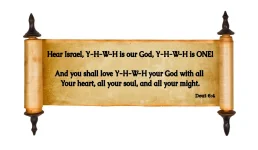
What I learned is the there is one God who is one, and that is Y-H-W-H:

Shma Eng.webp
God bless you, Jack, and your entire family.

Bob
Thank you, same to you.
 
You don't believe in the talmud, you don't believe in the Quran, there is undoubtedly a lot you don't believe in. So you should be able to accept that not everybody believes in your holy books. I don't believe in the NT. So NT quotes mean nothing to me.

Jack Horsefork

You said the Messiah cannot be Jesus because the ruling and judgment passages did not happen at His first coming. The prophets themselves say the Messiah would first be rejected and only later reign.

Micah does not present immediate national victory. After describing the ruler from Bethlehem whose origin is eternal, the text says Israel would be handed over for a time: “Therefore will he give them up, until…” ~Micah 5:3. That happened. He came to His own and was rejected, and Jerusalem was later overrun ~John 1:11, ~Luke 21:24.

You are expecting the kingdom first, but the prophets also said the Messiah would suffer: “He is despised and rejected of men” ~Isaiah 53:3 and “cut off out of the land of the living” ~Isaiah 53:8. The same Scriptures then speak of His later rule and judgment ~Isaiah 9:7, ~Isaiah 11:4.

The Bible itself explains the order: “the sufferings of Christ, and the glory that should follow” ~1 Peter 1:11.

So the issue is not failed prophecy. It is that you reject the part about the suffering Messiah. The first coming deals with sin and brings peace with God, “having made peace through the blood of his cross” ~Colossians 1:20. The judgment passages belong to His return when He judges the nations ~Zechariah 14:3-4.

Because you deny the Messiah revealed in Scripture and continue promoting a different message, your posts are now placed under moderation. This forum will not be used to teach against the gospel. You may participate in discussion, but posts advancing these claims will not be approved.
 
So right! We are waiting for people such as yourself, to interact : )
Blessings Linda
PS what or where is "Crosswalk"?
Here @Yesua888


You are more than welcome.

Johann.
 

Jack Horsefork

You said the Messiah cannot be Jesus because the ruling and judgment passages did not happen at His first coming. The prophets themselves say the Messiah would first be rejected and only later reign.

Micah does not present immediate national victory. After describing the ruler from Bethlehem whose origin is eternal, the text says Israel would be handed over for a time: “Therefore will he give them up, until…” ~Micah 5:3. That happened. He came to His own and was rejected, and Jerusalem was later overrun ~John 1:11, ~Luke 21:24.

You are expecting the kingdom first, but the prophets also said the Messiah would suffer: “He is despised and rejected of men” ~Isaiah 53:3 and “cut off out of the land of the living” ~Isaiah 53:8. The same Scriptures then speak of His later rule and judgment ~Isaiah 9:7, ~Isaiah 11:4.

The Bible itself explains the order: “the sufferings of Christ, and the glory that should follow” ~1 Peter 1:11.

So the issue is not failed prophecy. It is that you reject the part about the suffering Messiah. The first coming deals with sin and brings peace with God, “having made peace through the blood of his cross” ~Colossians 1:20. The judgment passages belong to His return when He judges the nations ~Zechariah 14:3-4.

Because you deny the Messiah revealed in Scripture and continue promoting a different message, your posts are now placed under moderation. This forum will not be used to teach against the gospel. You may participate in discussion, but posts advancing these claims will not be approved.
Why your forum is not "growing" @David you don't allow members to express themselves and I know you will ban me for expressing my conserns here.
Two members online, a sad tale.
No Hebrew, LXX and Koine Greek allowed.

J.
 
Last edited by a moderator:
Bs"d

Please explain what it must mean here and why.

The word is a noun, not a verb. So no activity. It means his origin, his ancestral line.


Also your messiah does not meet that description. Nobody does. Because the messiah didn't come yet.


Everybody can claim to be God or the messiah. That doesn't make them God or the messiah.

How do we know that the messiah is the messiah? By the fact that he fulfills the messianic prophecies.

JC did not fulfill the messianic prophecies, therefore he is not the messiah.

You can believe that the messiah is from beyond time itself. Just don't think it is written in Micha 5, because it isn't.
Already in error @Bs"d

Mic 5:1 (14) Now gather thyself in troops, O Bat Gedud (Daughter of Troops, i.e., warlike Yerushalayim); a matzor (siege) hath been laid against us; they shall strike the Shofet Yisroel with a rod upon the cheek [see The Besuras HaGeulah According to Mattityahu 27:30].
Mic 5:2 [5:1] But thou, Beitlechem Ephratah, though thou be little among the Alphei Yehudah (Thousands of Yehudah), yet out of thee shall He [Moshiach] come forth unto Me [Hashem] that is to be Moshel Yisroel; whose goings forth (i.e. origins) have been mikedem, (from everlasting; see Chabakuk 1:12), mimei olam (from the days of eternity).
Mic 5:3 [5:2] Therefore will He give them up, until the Et Yoledah (time when she who is in labor) hath brought forth; then the rest of His [Moshiach’s] Brethren shall return unto Bnei Yisroel.
Mic 5:4 [5:3] And He [Moshiach] shall stand and shall shepherd in the strength of Hashem, in the majesty of the Shem of Hashem Elohav, and they [Bnei Yisroel] shall live; for then shall He [Moshiach] be great unto the ends of ha'aretz.
Mic 5:5 [5:4] And this shall be Shalom. When the Assyrian shall invade our land; and when he shall set foot on our armenot (citadels), then shall we raise against him shivah ro'im (seven shepherds), and shmoneh nesikhei adam (eight leaders [tribal princes] of men).
Mic 5:6 [5:5] And they shall shepherd Eretz Ashur (Assyria) with the cherev, and Eretz Nimrod at its gates; thus shall He [Moshiach] deliver us from the Assyrian, when he cometh into our land, and when he sets foot within our borders.
OJB

...and can prove this with grammar, but I'm not allowed to use grammar.
So there is that, I'm already in trouble.

J.
 
Why your forum is not "growing" @David you don't allow members to express themselves and I know you will ban me for expressing my conserns here.
Two members online, a sad tale.
No Hebrew, LXX and Koine Greek allowed.
This has nothing to do with suppressing language study. It has to do with message. You are free to discuss, but not free to use the forum to deny the Messiah presented in Scripture.

The purpose here is the gospel. The apostles did the same. When teaching contradicted the truth, they stopped it: “that they teach no other doctrine” ~1 Timothy 1:3 and “a man that is an heretick after the first and second admonition reject” ~Titus 3:10.

People are welcome to ask, question, and examine the text. What is not permitted is persistent promotion of a different Christ. That is not censorship, it is guarding what the forum exists for, “earnestly contend for the faith which was once delivered unto the saints” ~Jude 3.

So you are not moderated for asking questions. You are moderated for continuing to push a message that contradicts the gospel this forum is built to defend.
 
...and can prove this with grammar, but I'm not allowed to use grammar.
So there is that, I'm already in trouble.
The issue is not grammar. The issue is what the text actually says. Micah does not describe a normal ancestry line. It says the ruler from Bethlehem has “goings forth… from everlasting” ~Micah 5:2. A human genealogy begins in time. “From everlasting” does not. Scripture uses the same language for God Himself, “from everlasting to everlasting, thou art God” ~Psalm 90:2.

And the same ruler is later rejected and Israel is given up for a time ~Micah 5:3, which matches the suffering passages, “cut off out of the land of the living” ~Isaiah 53:8, before the later reign and peace ~Isaiah 9:7.

So this is not about blocking Hebrew or grammar. It is about whether the prophets describe a Messiah who first suffers and is rejected before ruling. The Scriptures themselves say yes, “the sufferings of Christ, and the glory that should follow” ~1 Peter 1:11. The text is being read, not avoided. The grammar does not overturn the meaning plainly stated in the passage.
 
The issue is not grammar. The issue is what the text actually says. Micah does not describe a normal ancestry line. It says the ruler from Bethlehem has “goings forth… from everlasting” ~Micah 5:2. A human genealogy begins in time. “From everlasting” does not. Scripture uses the same language for God Himself, “from everlasting to everlasting, thou art God” ~Psalm 90:2.

And the same ruler is later rejected and Israel is given up for a time ~Micah 5:3, which matches the suffering passages, “cut off out of the land of the living” ~Isaiah 53:8, before the later reign and peace ~Isaiah 9:7.

So this is not about blocking Hebrew or grammar. It is about whether the prophets describe a Messiah who first suffers and is rejected before ruling. The Scriptures themselves say yes, “the sufferings of Christ, and the glory that should follow” ~1 Peter 1:11. The text is being read, not avoided. The grammar does not overturn the meaning plainly stated in the passage.
Correct, but will you allow me to use the Hebrew, LXX and Koine grammar? No.

I have not veer off and promulgate "another Christ Jesus" and you KNOW it @David.

....and

I. Teaching

Verb: διδάσκω
Meaning: to teach, instruct, impart structured content. It implies explanation, continuity, and doctrinal formation.

Example:
~Matthew 28:20
“Teaching them to observe all things whatsoever I have commanded you…”^[<h1>Teaching them to observe all things whatsoever I have commanded you: and, lo, I am with you alway, even unto the end of the world. Amen. <mark>- KJV</mark>]

Here διδάσκοντες governs the ongoing formation of disciples in commanded content. This is not proclamation to outsiders but sustained instruction within the covenant community.

Noun: διδασκαλία
Meaning: teaching, doctrine, the content of instruction.

~1 Timothy 4:13
“Give attendance to reading, to exhortation, to doctrine.”^[<h1>Till I come, give attendance to reading, to exhortation, to doctrine. <mark>- KJV</mark>]

“Doctrine” translates διδασκαλία. It refers to structured, preservable content.

Noun: διδάσκαλος
Meaning: teacher, one who performs the instructional role.

~Ephesians 4:11
“And he gave some… teachers.”^[<h1>And he gave some, apostles; and some, prophets; and some, evangelists; and some, pastors and teachers; <mark>- KJV</mark>]

The plural διδασκάλους marks a recognized function within ecclesial structure.

Verb: κατηχέω
Meaning: to instruct orally, often foundationally.

~Luke 1:4
“That thou mightest know the certainty of those things, wherein thou hast been instructed.”^[<h1>That thou mightest know the certainty of those things, wherein thou hast been instructed. <mark>- KJV</mark>]

“Instructed” renders κατηχήθης, denoting structured catechetical formation.

II. Preaching

Verb: κηρύσσω
Meaning: to proclaim as a herald, with delegated authority.

~2 Timothy 4:2
“Preach the word…”^[<h1>Preach the word; be instant in season, out of season; reprove, rebuke, exhort with all longsuffering and doctrine. <mark>- KJV</mark>]

κήρυξον is imperative. The semantic field is public proclamation, not classroom exposition.

Noun: κήρυγμα
Meaning: proclamation, the heralded message.

~1 Corinthians 1:21
“…by the foolishness of preaching to save them that believe.”^[<h1>For after that in the wisdom of God the world by wisdom knew not God, it pleased God by the foolishness of preaching to save them that believe. <mark>- KJV</mark>]

“Preaching” translates κηρύγματος, referring to the proclaimed message itself.

Noun: κήρυξ
Meaning: herald, official proclaimer.

~1 Timothy 2:7
“Whereunto I am ordained a preacher…”^[<h1>Whereunto I am ordained a preacher, and an apostle, (I speak the truth in Christ, and lie not;) a teacher of the Gentiles in faith and verity. <mark>- KJV</mark>]

“Preacher” renders κήρυξ, a formally appointed herald.

Verb: εὐαγγελίζω
Meaning: to proclaim good news, specifically gospel announcement.

~Luke 4:18
“…he hath anointed me to preach the gospel to the poor…”^[<h1>The Spirit of the Lord is upon me, because he hath anointed me to preach the gospel to the poor; he hath sent me to heal the brokenhearted, to preach deliverance to the captives, and recovering of sight to the blind, to set at liberty them that are bruised, <mark>- KJV</mark>]

Here εὐαγγελίσασθαι marks gospel proclamation, distinct from didactic formation.

Noun: εὐαγγέλιον
Meaning: the good news itself, the gospel content proclaimed.

~Mark 1:15
“Repent ye, and believe the gospel.”^[<h1>And saying, The time is fulfilled, and the kingdom of God is at hand: repent ye, and believe the gospel. <mark>- KJV</mark>]

III. Distinction Observed in the Same Verse

~1 Timothy 2:7 again shows lexical differentiation:
“…a preacher… a teacher…”^[<h1>Whereunto I am ordained a preacher, and an apostle, (I speak the truth in Christ, and lie not;) a teacher of the Gentiles in faith and verity. <mark>- KJV</mark>]

Paul uses κήρυξ and διδάσκαλος in parallel, not as synonyms but as coordinated yet distinct roles.

So...

διδάσκω and its cognates concern structured instruction, preservation, and transmission of doctrine within the body.
κηρύσσω and its cognates concern authoritative public proclamation.
εὐαγγελίζω specifies proclamation of the gospel message itself.
κατηχέω denotes formative instruction, often foundational.

The New Testament vocabulary is layered, not interchangeable, and the offices emerge from these verbal distinctions rather than from later ecclesial abstractions.

Sorry, thought this forum would allow the references to "pop up"

Will you allow me to teach this way, or not, that's all I'm asking.

J.
 
Last edited by a moderator:
The issue is not grammar. The issue is what the text actually says. Micah does not describe a normal ancestry line. It says the ruler from Bethlehem has “goings forth… from everlasting” ~Micah 5:2. A human genealogy begins in time. “From everlasting” does not. Scripture uses the same language for God Himself, “from everlasting to everlasting, thou art God” ~Psalm 90:2.

And the same ruler is later rejected and Israel is given up for a time ~Micah 5:3, which matches the suffering passages, “cut off out of the land of the living” ~Isaiah 53:8, before the later reign and peace ~Isaiah 9:7.

So this is not about blocking Hebrew or grammar. It is about whether the prophets describe a Messiah who first suffers and is rejected before ruling. The Scriptures themselves say yes, “the sufferings of Christ, and the glory that should follow” ~1 Peter 1:11. The text is being read, not avoided. The grammar does not overturn the meaning plainly stated in the passage.
This has nothing to do with suppressing language study. It has to do with message. You are free to discuss, but not free to use the forum to deny the Messiah presented in Scripture.

The purpose here is the gospel. The apostles did the same. When teaching contradicted the truth, they stopped it: “that they teach no other doctrine” ~1 Timothy 1:3 and “a man that is an heretick after the first and second admonition reject” ~Titus 3:10.

People are welcome to ask, question, and examine the text. What is not permitted is persistent promotion of a different Christ. That is not censorship, it is guarding what the forum exists for, “earnestly contend for the faith which was once delivered unto the saints” ~Jude 3.

So you are not moderated for asking questions. You are moderated for continuing to push a message that contradicts the gospel this forum is built to defend.
I have not preach/teach "another Christ" @David , our differences aside, you know this to be the truth, as God is my witness.

J.
 
Yesua888
You are more than welcome.
Johann.
I will be "muzzled" should I interact Yeshua.
J.
Why your forum is not "growing" @David you don't allow members to express themselves and I know you will ban me for expressing my conserns here.
Two members online, a sad tale.
No Hebrew, LXX and Koine Greek allowed.

J.
Already in error @Bs"d

Mic 5:1 (14) Now gather thyself in troops, O Bat Gedud (Daughter of Troops, i.e., warlike Yerushalayim); a matzor (siege) hath been laid against us; they shall strike the Shofet Yisroel with a rod upon the cheek [see The Besuras HaGeulah According to Mattityahu 27:30].
Mic 5:2 [5:1] But thou, Beitlechem Ephratah, though thou be little among the Alphei Yehudah (Thousands of Yehudah), yet out of thee shall He [Moshiach] come forth unto Me [Hashem] that is to be Moshel Yisroel; whose goings forth (i.e. origins) have been mikedem, (from everlasting; see Chabakuk 1:12), mimei olam (from the days of eternity).
Mic 5:3 [5:2] Therefore will He give them up, until the Et Yoledah (time when she who is in labor) hath brought forth; then the rest of His [Moshiach’s] Brethren shall return unto Bnei Yisroel.
Mic 5:4 [5:3] And He [Moshiach] shall stand and shall shepherd in the strength of Hashem, in the majesty of the Shem of Hashem Elohav, and they [Bnei Yisroel] shall live; for then shall He [Moshiach] be great unto the ends of ha'aretz.
Mic 5:5 [5:4] And this shall be Shalom. When the Assyrian shall invade our land; and when he shall set foot on our armenot (citadels), then shall we raise against him shivah ro'im (seven shepherds), and shmoneh nesikhei adam (eight leaders [tribal princes] of men).
Mic 5:6 [5:5] And they shall shepherd Eretz Ashur (Assyria) with the cherev, and Eretz Nimrod at its gates; thus shall He [Moshiach] deliver us from the Assyrian, when he cometh into our land, and when he sets foot within our borders.
OJB

...and can prove this with grammar, but I'm not allowed to use grammar.
So there is that, I'm already in trouble.
J.
So right! We are waiting for people such as yourself, to interact : ) Blessings Linda
PS what or where is "Crosswalk"?

I was prompted to respond to these posts.

crosswalk.com is a name from the past. It will celebrate 33 years in 2026. They may have a revolving door with many members that come and go, but they're still standing. Praise His Wonderful Name!

Hello, Johann;

I see Biblical Truth Forum as a new Christian site that just launched, pretty much like a Church plant. Within 20 years I've helped with two Church plants, less than 30 members and 17 first launched services, respectively.

My wife and I are serving our 4th year at our current Church under a ministry called Renewal. Back in 2020 their Pastor died of COVID and six years later God finally sent our new Pastor January 1, 2026.

A new ministry with small numbers is not the focus, but God who is growing His Church based on obedience, anointing, following His vision and new directions. What God knows, He works slowly, but surely.

I discern this is the same here at BTF. At first those logged on may only be a few members but only two posting. I've also witnessed two in attendance with no posts. In both cases when I'm logged on I'm also enjoying "reading" threads and a have a sense of a serene and tranquil place. I'm speaking to the Lord as I read and it's pretty nice. Most of my fellowship (conversations) with the membership has been in accord with God's Word and sola scriptura.

My wife and I are happy as members of BTF and it's forum rules during it's new beginning. So far I've been able to post, use language and ask questions with no hindrances from anyone.

I can see you advocate crosswalk.com and it appears you're enjoying your fellowship there. But as long as you remain a new member here, it's going to take time for God to grow this site. I'm content with that and we give Him all the glory.

God bless you, Johann, and your entire family.

Bob
 
Last edited:
I was prompted to respond to these posts.

crosswalk.com is a name from the past. It will celebrate 33 years in 2026. They may have a revolving door with many members that come and go, but they're still standing. Praise His Wonderful Name!

Hello, Johann;

I see Biblical Truth Forum as a new Christian site that just launched, pretty much like a Church plant. Within 20 years I've helped with two Church plants, less than 30 members and 17 first launched services, respectively.

My wife and I are serving our 4th year at our current Church under a ministry called Renewal. Back in 2020 their Pastor of 6 years died of COVID and God finally sent us our new Pastor January 1, 2026.

A new ministry with small numbers is not the focus, but God who is growing His Church based on obedience, anointing, following His vision and new directions. What God knows, He works slowly, but surely.

I discern this is the same here at BTF. At first those logged on may only be a few members but only two posting. I've also witnessed two in attendance with no posts. In both cases when I'm logged on I'm also enjoying "reading" threads and a have a sense of a serene and tranquil place. I'm speaking to the Lord as I read and it's pretty nice. Most of my fellowship (conversations) with the membership has been in accord with God's Word and sola scriptura.

My wife and I are happy as members of BTF and it's forum rules during it's new beginning. So far I've been able to post, use language and ask questions with no hindrances from anyone.

I can see you advocate crosswalk.com and it appears you're enjoying your fellowship there. But as long as you remain a new member here, it's going to take time for God to grow this site. I'm content with that and we give Him all the glory.

God bless you, Johann, and your entire family.

Bob
Blessings and shalom to you and family Bob, funny thing, my pastor is Bob and grammar aside, I'm not allowed to use him for the edifying of the saints, me included.

J.
 
Will you allow me to teach this way, or not, that's all I'm asking.
No. On BTF you may not redirect discussions to teaching systems, scholars, or interpretive frameworks in place of what Scripture itself says. The authority here is the Word of God: “to the law and to the testimony: if they speak not according to this word, it is because there is no light in them” Isaiah 8:20.

Stay with the passage itself. Answer from Scripture directly, not from opinions about Scripture.
 
Why your forum is not "growing" @David you don't allow members to express themselves and I know you will ban me for expressing my conserns here.
Two members online, a sad tale.
No Hebrew, LXX and Koine Greek allowed.

J.
Johan,

Most of us are very grateful that our forum is "not growing" as you see it ...

BTF's Mission is to make sure that we speak and learn the Truth of the Gospel and not to add or subtract from it. Should it be necessary to Sift out the Wheat from the Char, then so be it:
  • Matthew 3:12 (NLT): "He is ready to separate the chaff from the wheat with his winnowing fork. Then he will clean up the threshing area, gathering the wheat into his barn but burning the chaff with never-ending fire."
    Luke 3:17 (NKJV): "His winnowing fan is in His hand, and He will thoroughly clean out His threshing floor, and gather the wheat into the barn; but the chaff He will burn with unquenchable fire."
There is this verse too:
  • Matthew 13:24–30: In the Parable of the Wheat and the Tares, Jesus explains that both good and bad will grow together until the harvest, when angels will separate them—“First gather the tares and bind them in bundles to burn them, but gather the wheat into my barn.”
    This indicates that the separation will occur at the end of the age, not before.
Well this could be argued I suppose ... have you ever subscribed to other "Christian" forums, where "anything goes" ... well, I have, and this is the reason why I am on BTF, because this is my safe place : )
  • Matthew 13:47–50: The Parable of the Dragnet shows a similar theme—fish are gathered into a net, and at the end, the good are kept while the bad are thrown away, symbolizing final judgment.
  • Luke 22:31 (NKJV): "Simon, Simon! Indeed, Satan has asked for you, that he may sift you as wheat."
    Here, “sifting” refers to spiritual testing, not separation—Satan seeks to test the disciples’ faith, but Jesus prays for Peter’s faith to remain strong.
This is not an easy task for David and he does not profess to act like God ... he serves God and stands firm on keeping BTF uncluttered, and True to form.

If you were to wear David's shoes, I am sure you would understand : )

PS This is how I see David's task:

1 Corinthians 12:26
And if one member suffers, all the members suffer with it; or if one member is honored, all the members rejoice with it.
 
Last edited:
People are confused about who is God.

God is not a carpenter. The God who created the heaven and the earth, the God of Abraham, Isaac and Jacob, that is Y-H-W-H.

Link removed for false teaching.
Hello all,

Jack, I'm new here as well. However, I believe as you do about God, but without Judaism. Simultaneously, I also believe in Jesus as well. With that said, do you believe the Messiah for the Jews is in the world now?
 
Last edited:
Bs"d

Please explain what it must mean here and why.

The word is a noun, not a verb. So no activity. It means his origin, his ancestral line.


Also your messiah does not meet that description. Nobody does. Because the messiah didn't come yet.


Everybody can claim to be God or the messiah. That doesn't make them God or the messiah.

How do we know that the messiah is the messiah? By the fact that he fulfills the messianic prophecies.

JC did not fulfill the messianic prophecies, therefore he is not the messiah.

You can believe that the messiah is from beyond time itself. Just don't think it is written in Micha 5, because it isn't.
Jesus/Yahshua is the Messiah.
 
Hello Jack Horsefork;

I can discern your love for God and are a faithful disciple of Judaism or Messianic Judaism.

I'm a partner / brother in Christ with
Jews for Jesus and the International Fellowship of Christians and Jews for well over 30 years. This is not a humble brag but a serious praise to God. Many cannot say they have Godly brothers and sisters across the miles. My wife and I have been blessed immensely by God Almighty with these friends.

From my understanding of what you're discussing is discipline of the Mitzvah, or instructional study on a daily basis.

Though I'm not an avid student of the Mitzvah I aim more to be a disciple of the Bible but with
a listening ear. I feel there is a difference between a Christian disciple of the Bible and a Judaism student of the Mitzvah. There will be definitive differences in the Bible, Torah, the doctrine of God, His only beloved Son and the profound teaching of salvation.

In other words there is a fundamental difference between the Mitzvah and Sola Scriptura, which is the core teaching here at Biblical Truth Forum. The key is, how can we arrive at an understanding of common ground.

If you feel what I'm sharing / defining is in error, then that's on me, therefore,
Jack, please leave out the debate for we're getting ahead of ourselves, and instead clarify what you are conveying from your studies and belief in this thread to help me understand?

God bless
you, Jack, and your entire family.

Bob
I believe Jack is a follower of Judaism. It's interesting, because they're some of the nicest people in my area. I met some of these people at a temple for a Bar Mitzvah last year. I felt welcome there, even though I don't believe as they do.
 
PS This is how I see David's task:
1 Corinthians 12:26
And if one member suffers, all the members suffer with it; or if one member is honored, all the members rejoice with it.
In the Hebrew Scriptures, the common verb often translated “to explain” or “to make clear” is בָּאַר (baʾar). Its core sense is “to make plain” or “to clarify distinctly.” It appears, for example, in contexts where the law is written or set forth in a way that removes ambiguity. The semantic range carries the idea of rendering something intelligible, not inventing new meaning but uncovering what is already there. Closely related conceptually is פָּרַשׁ (parash), meaning “to separate” or “to set forth distinctly,” which underlies the idea that explanation involves distinguishing elements carefully so that meaning is not confused. Explanation in Hebrew thought therefore involves precision and separation, drawing lines so that the intended sense stands out clearly.

In Koine Greek, several verbs contribute to the idea of explaining Scripture. One is ἐκτίθημι (ektithēmi), literally “to set out” or “to lay before,” used for presenting something in an orderly way so that it can be understood. Another is διερμηνεύω (diermēneuō), meaning “to interpret thoroughly” or “to translate and explain,” from which we derive the word hermeneutics.

The prefix intensifies the verb, suggesting a careful, detailed unfolding rather than a surface-level summary.
There is also διανοίγω (dianoigō), “to open fully,” often used metaphorically for opening understanding, implying that explanation involves removing barriers to comprehension.

Lexically, both the Hebrew and Greek terms share a structural logic: explanation is not creative embellishment but disclosure. The Hebrew emphasizes clarity through distinction; the Greek emphasizes orderly presentation and interpretive unfolding. In both traditions, to “explain” Scripture means to bring its inherent meaning to light through linguistic, grammatical, and contextual precision, not to impose foreign concepts upon it.

If someone claims that deeper grammatical work constitutes distortion, they would have to redefine explanation itself, because the biblical vocabulary for explanation presupposes careful articulation, not avoidance of textual depth.

1 member online when I posted this.

Something that is not taught here...

Hermeneutics and apologia are not the mechanical act of repeating a text verbatim as though mere citation were equivalent to comprehension.


Hermeneutics, from the Greek ἑρμηνεύω, concerns the disciplined task of interpretation, drawing out meaning through attention to grammar, syntax, lexical range, and historical setting, so that what the text intends is articulated clearly rather than merely echoed.

Apologia, from ἀπολογία, denotes a reasoned defense or rational account, not a recital of lines but an argument grounded in understanding, coherence, and contextual fidelity.

Therefore, neither discipline is satisfied by quotation alone; both require careful exposition that brings forth the sense of the text rather than simply reproducing its surface form.

I sincerely hope you understand where I'm going with this so there is no misunderstanding re a "language barrier" and quoting the parables verbatim without exegesis asking the "to whom, where, what, to what intent, with what words..."

If you compress his [ Miles Coverdale’s] method into interrogatives, it would look like this: Who is speaking? To whom are they speaking? In what covenantal moment? About what concrete issue? How does the grammar shape meaning? How does this cohere with the whole canon centered on redemption?


1771512874079.webpMiles Coverdale

You have a blessed day.

J.
 
Last edited by a moderator:
Hello all,

Jack, I'm new here as well. However, I believe as you do about God, but without Judaism. Simultaneously, I also believe in Jesus as well. With that said, do you believe the Messiah for the Jews is in the world now?

Good morning, Dave Bannister;

Thank you for joining Biblical Truth Forum. We hope you enjoy the fellowship here with everyone.

For most of Judaism, the Messiah for the Jews has not yet come. That's their belief. Some of our most special friends and some of the most wonderful people are Jewish, were called to relocate back or immigrate (Aliyah) to Israel during these times.

I'm a Christian who follows Jesus and strongly believe He has not come nor do I know the time. I do stand with the belief He dwells in all of us through the Holy Spirit who believe. But I don't know the time when the Father will send His Son reference Matthew 24:36-44.

My wife and I reside in the SF Bay Area. We co-exist in the community with peoples of all faiths. For the Jew or nominal Christian, when it is heard or said of Christ the Messiah or the Messiah is "in the world now," it's as if Jesus has returned to do some spectacular mission. This is not so, not yet, for we do not know the time.

What can we do to be prepared for Christ our Messiah's return?

Each day be watchful and ready, love one another, pray incessantly, study the Bible, live Holy Godly lives, share the Gospel, remain faithful in your work, don't be troubled, be truthful in all things, and my personal anthem practiced daily is remain hopeful in the Lord.

These disciplines are much more beneficial than squabbling and dividing over Judaism or Christian beliefs in mindless debates, just to win the argument? I am grateful for the times I was in those woeful heats of squabbling but learned later I was prayed for when I didn't know. The Lord who dwells in me grew me up and I have to thank and praise God for those unspoken prayers.

God bless you, Dave Bannister, your entire family, and thank you for allowing me to share.

Bob
 
Last edited:
In the Hebrew Scriptures, the common verb often translated “to explain” or “to make clear”
Johann, this is exactly where the concern lies. On Biblical Truth Forum the authority is the written Word itself, not a framework used to unlock the Word.

In Scripture, when people erred, they were corrected by being brought back to what was written, not by being introduced to a method. Jesus repeatedly answered the learned interpreters with, “Have ye not read…?” ~Matthew 12:3 and “Have ye not read…?” ~Matthew 19:4. The text itself was the correction.

Abraham said, “They have Moses and the prophets; let them hear them” ~Luke 16:29.

Paul said truth is known by “comparing spiritual things with spiritual” ~1 Corinthians 2:13.

The Bereans tested teaching by searching the Scriptures ~Acts 17:11.

That is the biblical pattern. Scripture explains Scripture.

Twisting does not come from Scripture being unclear but from men refusing to submit to what it says. Peter warned that the “unlearned and unstable wrest… the scriptures” ~2 Peter 3:16, and Paul explains why, because they “received not the love of the truth” ~2 Thessalonians 2:10. The issue is not careful explanation but handling the Word in a way that reshapes its meaning instead of receiving it. That is why the safeguard remains to let Scripture speak and to test all teaching by what is written. Notice the problem is not quoting Scripture too directly. The problem is what men do to it.

That is how the first deception happened. Satan did not deny God spoke. He reframed it: “Yea, hath God said…?” ~Genesis 3:1. The moment the focus shifted from the clear command to interpretive reasoning, the meaning changed.

God says His Word makes “wise the simple” ~Psalm 19:7 and that a child can know it ~2 Timothy 3:15. So the meaning cannot depend on specialists or technical systems before it can speak. Once it does, people stop checking Scripture and start trusting the interpreter. That is why this approach so easily becomes a vehicle for distortion.

Today many people are twisting Scripture to change its plain meaning. They reinterpret what it says about hell, church leadership, sexual sin, even denying the Trinity and other clear teachings, and that comes from reshaping what the text says instead of submitting to it.

So the rule here is simple: stay with the text and explain it using other Scripture. Do not move people away from what is written into interpretive frameworks that stand over it.

Scripture judges the teacher, not the teacher the Scripture.

This is a standing forum rule and not open for debate here.
 
Jack, I'm new here as well. However, I believe as you do about God, but without Judaism. Simultaneously, I also believe in Jesus as well. With that said, do you believe the Messiah for the Jews is in the world now?
For clarity, Jack Horsefork was banned because he continually promoted teaching that would not submit to the Word of God. He was shown the Scriptures and urged to stay with what the text says, yet he persisted in pushing people away from it.

This is not about winning arguments or silencing disagreement. It is about guarding the flock. Scripture commands, “a man that is an heretick after the first and second admonition reject” ~Titus 3:10, and elders are to “stop the mouths” of those who subvert others ~Titus 1:11.

So the action was not personal. It was obedience. When someone refuses correction from Scripture and continues spreading error, the church must protect those who are listening.

And to answer your question: No, we must let Scripture be our guide here, not expectation or tradition. The Bible never commands us to await a Messiah that may or may not appear in our lifetime. It pronounces that He has already come. Peter stood before all Israel and proclaimed, “God hath made that same Jesus, whom ye have crucified, both Lord and Christ” ~Acts 2:36. The Messiah is not of the future. The Messiah is Jesus of Nazareth who was crucified and then raised from the dead.

Hebrews is even more blunt, “now once in the end of the world hath he appeared to put away sin by the sacrifice of himself” ~Hebrews 9:26. If He has appeared to deal with sin once and for all, then we are not waiting on another Savior to come. We are waiting for the return of the One who was revealed.

Christ Himself told us what the human heart would do. “I am come in my Father’s name, and ye receive me not: if another shall come in his own name, him ye will receive” ~John 5:43. Men will continue to look for another because they rejected the true Messiah.

So the real question is not if the Messiah is walking the earth today. The question is if we have bowed before the One Messiah God has already appointed, for “he hath appointed a day, in the which he will judge the world in righteousness by that man whom he hath ordained” ~Acts 17:31.
 
Good morning, Dave Bannister;

Thank you for joining Biblical Truth Forum. We hope you enjoy the fellowship here with everyone.

For most of Judaism, the Messiah for the Jews has not yet come. That's their belief. Some of our most special friends and some of the most wonderful people are Jewish, were called to relocate back or immigrate (Aliyah) to Israel during these times.

I'm a Christian who follows Jesus and strongly believe He has not come nor do I know the time. I do stand with the belief He dwells in all of us through the Holy Spirit who believe. But I don't know the time when the Father will send His Son reference Matthew 24:36-44.

My wife and I reside in the SF Bay Area. We co-exist in the community with peoples of all faiths. For the Jew or nominal Christian, when it is heard or said of Christ the Messiah or the Messiah is "in the world now," it's as if Jesus has returned to do some spectacular mission. This is not so, not yet, for we do not know the time.

What can we do to be prepared for Christ our Messiah's return?

Each day be watchful and ready, love one another, pray incessantly, study the Bible, live Holy Godly lives, share the Gospel, remain faithful in your work, don't be troubled, be truthful in all things, and my personal anthem practiced daily is remain hopeful in the Lord.

These disciplines are much more beneficial than squabbling and dividing over Judaism or Christian beliefs in mindless debates, just to win the argument? I am grateful for the times I was in those woeful heats of squabbling but learned later I was prayed for when I didn't know. The Lord who dwells in me grew me up and I have to thank and praise God for those unspoken prayers.

God bless you, Dave Bannister, your entire family, and thank you for allowing me to share.

Bob
I was asking him, but he has been banned. Jesus is the messiah, but I was curious if he thought the messiah of judaism is in the world now.
 
No sorry Johann,
This has not clarified or explained what you are trying to portray here:
"I sincerely hope you understand where I'm going with this so there is no misunderstanding re a "language barrier" and quoting the parables verbatim without exegesis asking the "to whom, where, what, to what intent, with what words..."
I'm just not getting your "message" ... it is way too "convoluted" or complicated or even muddled for clarity, sorry to be so blatantly honest!
In the Hebrew Scriptures, the common verb often translated “to explain” or “to make clear” is בָּאַר (baʾar). Its core sense is “to make plain” or “to clarify distinctly.” It appears, for example, in contexts where the law is written or set forth in a way that removes ambiguity. The semantic range carries the idea of rendering something intelligible, not inventing new meaning but uncovering what is already there. Closely related conceptually is פָּרַשׁ (parash), meaning “to separate” or “to set forth distinctly,” which underlies the idea that explanation involves distinguishing elements carefully so that meaning is not confused. Explanation in Hebrew thought therefore involves precision and separation, drawing lines so that the intended sense stands out clearly.

In Koine Greek, several verbs contribute to the idea of explaining Scripture. One is ἐκτίθημι (ektithēmi), literally “to set out” or “to lay before,” used for presenting something in an orderly way so that it can be understood. Another is διερμηνεύω (diermēneuō), meaning “to interpret thoroughly” or “to translate and explain,” from which we derive the word hermeneutics.

The prefix intensifies the verb, suggesting a careful, detailed unfolding rather than a surface-level summary.
There is also διανοίγω (dianoigō), “to open fully,” often used metaphorically for opening understanding, implying that explanation involves removing barriers to comprehension.

Lexically, both the Hebrew and Greek terms share a structural logic: explanation is not creative embellishment but disclosure. The Hebrew emphasizes clarity through distinction; the Greek emphasizes orderly presentation and interpretive unfolding. In both traditions, to “explain” Scripture means to bring its inherent meaning to light through linguistic, grammatical, and contextual precision, not to impose foreign concepts upon it.

If someone claims that deeper grammatical work constitutes distortion, they would have to redefine explanation itself, because the biblical vocabulary for explanation presupposes careful articulation, not avoidance of textual depth.

1 member online when I posted this.

Something that is not taught here...

Hermeneutics and apologia are not the mechanical act of repeating a text verbatim as though mere citation were equivalent to comprehension.


Hermeneutics, from the Greek ἑρμηνεύω, concerns the disciplined task of interpretation, drawing out meaning through attention to grammar, syntax, lexical range, and historical setting, so that what the text intends is articulated clearly rather than merely echoed.

Apologia, from ἀπολογία, denotes a reasoned defense or rational account, not a recital of lines but an argument grounded in understanding, coherence, and contextual fidelity.

Therefore, neither discipline is satisfied by quotation alone; both require careful exposition that brings forth the sense of the text rather than simply reproducing its surface form.

I sincerely hope you understand where I'm going with this so there is no misunderstanding re a "language barrier" and quoting the parables verbatim without exegesis asking the "to whom, where, what, to what intent, with what words..."

If you compress his [ Miles Coverdale’s] method into interrogatives, it would look like this: Who is speaking? To whom are they speaking? In what covenantal moment? About what concrete issue? How does the grammar shape meaning? How does this cohere with the whole canon centered on redemption?


View attachment 310Miles Coverdale

You have a blessed day.

J.
 
Last edited:
Thank you David ... this explains what I was trying to say so "blatantly" ... you always back things up as they should be, with scripture. This why I am here, and want to soak up as much Scripture and Truth that I can, like never before : )

That is why the safeguard remains to let Scripture speak and to test all teaching by what is written. Notice the problem is not quoting Scripture too directly. The problem is what men do to it.

That is how the first deception happened. Satan did not deny God spoke. He reframed it: “Yea, hath God said…?” ~Genesis 3:1. The moment the focus shifted from the clear command to interpretive reasoning, the meaning changed.

God says His Word makes “wise the simple” ~Psalm 19:7 and that a child can know it ~2 Timothy 3:15. So the meaning cannot depend on specialists or technical systems before it can speak. Once it does, people stop checking Scripture and start trusting the interpreter. That is why this approach so easily becomes a vehicle for distortion.

Today many people are twisting Scripture to change its plain meaning. They reinterpret what it says about hell, church leadership, sexual sin, even denying the Trinity and other clear teachings, and that comes from reshaping what the text says instead of submitting to it.
 
G
Hello all,

Jack, I'm new here as well. However, I believe as you do about God, but without Judaism. Simultaneously, I also believe in Jesus as well. With that said, do you believe the Messiah for the Jews is in the world now?
Good question : )
 
Johann, this is exactly where the concern lies. On Biblical Truth Forum the authority is the written Word itself, not a framework used to unlock the Word.

In Scripture, when people erred, they were corrected by being brought back to what was written, not by being introduced to a method. Jesus repeatedly answered the learned interpreters with, “Have ye not read…?” ~Matthew 12:3 and “Have ye not read…?” ~Matthew 19:4. The text itself was the correction.

Abraham said, “They have Moses and the prophets; let them hear them” ~Luke 16:29.

Paul said truth is known by “comparing spiritual things with spiritual” ~1 Corinthians 2:13.

The Bereans tested teaching by searching the Scriptures ~Acts 17:11.

That is the biblical pattern. Scripture explains Scripture.

Twisting does not come from Scripture being unclear but from men refusing to submit to what it says. Peter warned that the “unlearned and unstable wrest… the scriptures” ~2 Peter 3:16, and Paul explains why, because they “received not the love of the truth” ~2 Thessalonians 2:10. The issue is not careful explanation but handling the Word in a way that reshapes its meaning instead of receiving it. That is why the safeguard remains to let Scripture speak and to test all teaching by what is written. Notice the problem is not quoting Scripture too directly. The problem is what men do to it.

That is how the first deception happened. Satan did not deny God spoke. He reframed it: “Yea, hath God said…?” ~Genesis 3:1. The moment the focus shifted from the clear command to interpretive reasoning, the meaning changed.

God says His Word makes “wise the simple” ~Psalm 19:7 and that a child can know it ~2 Timothy 3:15. So the meaning cannot depend on specialists or technical systems before it can speak. Once it does, people stop checking Scripture and start trusting the interpreter. That is why this approach so easily becomes a vehicle for distortion.

Today many people are twisting Scripture to change its plain meaning. They reinterpret what it says about hell, church leadership, sexual sin, even denying the Trinity and other clear teachings, and that comes from reshaping what the text says instead of submitting to it.

So the rule here is simple: stay with the text and explain it using other Scripture. Do not move people away from what is written into interpretive frameworks that stand over it.

Scripture judges the teacher, not the teacher the Scripture.

This is a standing forum rule and not open for debate here.

No sorry Johann,
This has not clarified or explained what you are trying to portray here:
"I sincerely hope you understand where I'm going with this so there is no misunderstanding re a "language barrier" and quoting the parables verbatim without exegesis asking the "to whom, where, what, to what intent, with what words..."
I'm just not getting your "message" ... it is way too "convoluted" or complicated or even muddled for clarity, sorry to be so blatantly honest!
Alright, so you all have been taught by David to quote Scripture exactly as written, word for word, with no explanation necessary.

1 Corinthians 3:1–3^[<h1>And I, brethren, could not speak unto you as unto spiritual, but as unto carnal, even as unto babes in Christ. I have fed you with milk, and not with meat: for hitherto ye were not able to bear it, neither yet now are ye able. For ye are yet carnal: for whereas there is among you envying, and strife, and divisions, are ye not carnal, and walk as men?
<mark>KJV</mark>]

Hebrews 5:12–14^[<h1>For when for the time ye ought to be teachers, ye have need that one teach you again which be the first principles of the oracles of God, and are become such as have need of milk, and not of strong meat. For every one that useth milk is unskilful in the word of righteousness: for he is a babe. But strong meat belongeth to them that are of full age, even those who by reason of use have their senses exercised to discern both good and evil. <mark>KJV</mark>]

Ephesians 4:14–15^[<h1>That we henceforth be no more children, tossed to and fro, and carried about with every wind of doctrine, by the sleight of men, and cunning craftiness, whereby they lie in wait to deceive; But speaking the truth in love, may grow up into him in all things, which is the head, even Christ: <mark>KJV</mark>]

2 Peter 3:18^[<h1>But grow in grace, and in the knowledge of our Lord and Saviour Jesus Christ. To him be glory both now and for ever. Amen. <mark>KJV</mark>]

Colossians 2:6–7^[<h1>As ye have therefore received Christ Jesus the Lord, so walk ye in him: Rooted and built up in him, and stablished in the faith, as ye have been taught, abounding therein with thanksgiving. <mark>KJV</mark>]
Col 2:6 Therefore, οὖν just as Ὡς you have received παρελάβετε - τὸν Christ Χριστὸν Jesus Ἰησοῦν the τὸν Lord, Κύριον, walk περιπατεῖτε, in ἐν Him, αὐτῷ
Col 2:7 having been rooted ἐρριζωμένοι and καὶ being built up ἐποικοδομούμενοι in ἐν Him, αὐτῷ and καὶ being strengthened in βεβαιούμενοι the τῇ faith, πίστει just as καθὼς you were taught, ἐδιδάχθητε, abounding περισσεύοντες in (ἐν it αὐτῇ) with ἐν thanksgiving. εὐχαριστίᾳ.
Col 2:8 Take heed Βλέπετε lest μή there will be ἔσται anyone τις - ὁ taking you captive συλαγωγῶν . . . ὑμᾶς through διὰ - τῆς philosophy φιλοσοφίας and καὶ empty κενῆς deceit, ἀπάτης according to κατὰ the τὴν tradition παράδοσιν - τῶν of men, ἀνθρώπων, according to κατὰ the τὰ principles στοιχεῖα of the τοῦ world κόσμου and καὶ not οὐ according to κατὰ Christ. Χριστόν·
Col 2:9 For ὅτι in ἐν Him αὐτῷ all πᾶν the τὸ fullness πλήρωμα of the τῆς Deity Θεότητος dwells κατοικεῖ bodily. σωματικῶς,
Col 2:10 And καὶ you are ἐστὲ complete πεπληρωμένοι, in ἐν Him, αὐτῷ who ὅς is ἐστιν the ἡ head κεφαλὴ of all πάσης rule ἀρχῆς and καὶ authority, ἐξουσίας,


2Pe 3:16 as ὡς also καὶ in ἐν all πάσαις the ‹ταῖς› letters, ἐπιστολαῖς speaking λαλῶν in ἐν them αὐταῖς concerning περὶ these things, τούτων, among ἐν which αἷς some things τινα, are ἐστιν difficult to be understood, δυσνόητά which ἃ the οἱ ignorant ἀμαθεῖς and καὶ unestablished ἀστήρικτοι distort στρεβλοῦσιν to πρὸς their αὐτῶν own ἰδίαν - τὴν destruction, ἀπώλειαν. as ὡς also καὶ the τὰς other λοιπὰς Scriptures. γραφὰς
2Pe 3:17 Therefore οὖν, beloved, ἀγαπητοί, knowing [this] beforehand, προγινώσκοντες you Ὑμεῖς beware, φυλάσσεσθε lest ἵνα vvv μὴ you should fall from ἐκπέσητε the τοῦ own ἰδίου steadfastness, στηριγμοῦ, having been led away συναπαχθέντες by the τῇ error πλάνῃ of the τῶν lawless. ἀθέσμων
2Pe 3:18 But δὲ grow αὐξάνετε in ἐν grace χάριτι and καὶ in knowledge γνώσει of our ἡμῶν - τοῦ Lord Κυρίου and καὶ Savior Σωτῆρος Jesus Ἰησοῦ Christ. Χριστοῦ. To Him [be] αὐτῷ the ἡ glory δόξα both καὶ now νῦν and καὶ to εἰς [the] day ἡμέραν of eternity. αἰῶνος. Amen. ‹Ἀμήν›.


Eph 4:13 until μέχρι - οἱ vvv πάντες we all may attain καταντήσωμεν to εἰς the τὴν unity ἑνότητα of the τῆς faith πίστεως and καὶ of the τῆς knowledge ἐπιγνώσεως of the τοῦ Son Υἱοῦ - τοῦ of God, Θεοῦ, unto εἰς a complete τέλειον, man, ἄνδρα to εἰς [the] measure μέτρον of [the] stature ἡλικίας of the τοῦ fullness πληρώματος - τοῦ of Christ, Χριστοῦ,
Eph 4:14 so that ἵνα no longer μηκέτι we might be ὦμεν infants, νήπιοι, being tossed by waves κλυδωνιζόμενοι and καὶ being carried about περιφερόμενοι by every παντὶ wind ἀνέμῳ - τῆς of teaching διδασκαλίας in ἐν the τῇ cunning, κυβείᾳ* in ἐν the τῶν craftiness πανουργίᾳ of men ἀνθρώπων with a view to πρὸς the τὴν - τῆς scheming μεθοδείαν of deceit. πλάνης,
Eph 4:15 But δὲ speaking the truth ἀληθεύοντες in ἐν love, ἀγάπῃ we should grow up αὐξήσωμεν in τὰ all things πάντα, into εἰς Him αὐτὸν who ὅς is ἐστιν the ἡ head, κεφαλή, Christ, Χριστός,
Eph 4:16 from ἐξ whom οὗ the τὸ whole πᾶν body, σῶμα being joined together συναρμολογούμενον and καὶ being held together συμβιβαζόμενον by διὰ every πάσης ligament ἁφῆς of [its] τῆς supply, ἐπιχορηγίας according to κατ’ [the] working ἐνέργειαν in ἐν [the] measure μέτρῳ of each ἑκάστου individual ἑνὸς part, μέρους the τὴν increase αὔξησιν of the τοῦ body σώματος makes for itself, ποιεῖται to εἰς [the] building up οἰκοδομὴν of itself ἑαυτοῦ in ἐν love. ἀγάπῃ.


Heb 5:11 Concerning Περὶ this οὗ [there is] much πολὺς - ὁ speech λόγος from us, ἡμῖν and καὶ difficult in interpretation δυσερμήνευτος to speak, λέγειν, since ἐπεὶ you have become γεγόνατε sluggish νωθροὶ in the ταῖς hearings. ἀκοαῖς.
Heb 5:12 For γὰρ even καὶ by διὰ the τὸν time χρόνον, you ought ὀφείλοντες to be εἶναι teachers, διδάσκαλοι you have ἔχετε need of χρείαν [one] τοῦ to teach διδάσκειν you ὑμᾶς again πάλιν what [is] τινα the τὰ beginning ἀρχῆς of the τῆς principles στοιχεῖα of the τῶν oracles λογίων - τοῦ of God; Θεοῦ, and καὶ you have become γεγόνατε [those] having ἔχοντες need χρείαν of milk, γάλακτος, and [καὶ] not οὐ of solid στερεᾶς food. τροφῆς.
Heb 5:13 For γὰρ everyone πᾶς - ὁ partaking μετέχων of milk γάλακτος [is] unskilled ἄπειρος in [the] word λόγου of righteousness, δικαιοσύνης, for γάρ he is ἐστιν· an infant. νήπιος
Heb 5:14 But δέ solid στερεὰ - ἡ food τροφή, is ἐστιν [for the] mature, τελείων the [ones] τῶν by διὰ - τὴν constant use ἕξιν having ἐχόντων trained γεγυμνασμένα the τὰ senses αἰσθητήρια for πρὸς distinguishing διάκρισιν both τε good καλοῦ and καὶ evil. κακοῦ.

Truly sad.

J.
 
Last edited by a moderator:
Alright, so you all have been taught by David to quote Scripture exactly as written, word for word, with no explanation necessary.
Johann, that is not what was said. No one here is arguing for quoting verses without understanding. The question is where understanding comes from. Does the meaning come from the text itself, or from a system placed over it?

The passages you posted answer that. Maturity comes from being trained by the Word, those “who by reason of use have their senses exercised to discern both good and evil” ~Hebrews 5:14. Discernment grows out of continual exposure to Scripture, not dependence on interpretive frameworks.

Paul warns about being “carried about with every wind of doctrine” ~Ephesians 4:14. That happens when something other than the Word becomes the controlling authority. Truth anchors the believer to Christ because it is measured by what God has said.

Peter explains the real danger. Men “wrest… the scriptures, unto their own destruction” ~2 Peter 3:16. The problem is not that Scripture is too plain. The problem is what men do to its meaning.

Explanation is necessary, but it must serve the text, not replace it. The Bereans did not test teaching by methods or theories. They “searched the scriptures daily, whether those things were so” ~Acts 17:11.

That remains the standard. The Word of God judges the teacher. The teacher does not judge the Word.
 
Paul warns about being “carried about with every wind of doctrine” ~Ephesians 4:14. That happens when something other than the Word becomes the controlling authority. Truth anchors the believer to Christ because it is measured by what God has said.
Elaborate what you mean by "something other" than the word becoming the "controlling authority"

J.
 
Elaborate what you mean by "something other" than the word becoming the "controlling authority"
Johann, using commentaries or teachers is not the problem. They can help us understand background or wording. The issue is who gets the final say. Think of it like this. The Bible is the answer sheet. Commentaries are students trying to explain the answers. If a student explains the answer correctly, great. If he changes the answer, the answer sheet is still right and the student is wrong.

So we can read from teachers, history, language notes, all of that. But they are helpers, not judges. Scripture stays the authority: “to the law and to the testimony” ~Isaiah 8:20. Teachers serve the text. They do not rewrite it.

This is why it matters which teachers we listen to. Some explain what the Bible says. Others reshape it into their own opinions. We test everything by Scripture.

If someone teaches there is no hell, but Jesus spoke of eternal punishment ~Matthew 25:46, the teacher is wrong.

If someone says sinful lifestyles are approved, but Scripture calls for repentance ~1 Corinthians 6:9-11, the teacher is wrong.

If someone says Jesus is not God, but Scripture says “the Word was God” ~John 1:1, the teacher is wrong.

So, when teachers, commentaries, opinions, traditions, or interpretations are allowed to override what Scripture actually says, they become the authority instead of the Bible.

Teachers can be helpful, but they must always be tested by what the Bible actually says. The Bible is the standard, not the teacher.

We should place our faith in what God says, not in what men say, because deception is running rampant today and many are being led straight to hell by false teachers.

“Put not your trust in princes, nor in the son of man, in whom there is no help” ~Psalm 146:3

“To the law and to the testimony: if they speak not according to this word, it is because there is no light in them” ~Isaiah 8:20

Jesus warned, “Take heed that no man deceive you” ~Matthew 24:4

And about false teachers: “And many will follow their sensuality, and because of them the way of truth will be blasphemed. And in their greed they will exploit you with false words. Their condemnation from long ago is not idle, and their destruction is not asleep.” ~ 2 Peter 2:2-3

So Scripture keeps pointing us back to the same place. Trust what God has spoken and test every voice by it.
 
Elaborate what you mean by "something other" than the word becoming the "controlling authority"

J.
Here, I have a question for you David, how, according to the text, is God going to judge the secrets of men?
(ESV) acon that day when, adaccording to my gospel, God judges aethe secrets of men afby Christ Jesus.

Would you say I impose my presuppositions when I say....

κρίνω (krinō) to judge (G2919)
(Verb Present Active Indicative 3rd Singular )

This word occurs about 113 x
Meaning
to decide, consider, as preferring one thing over another or determining the correctness of a matter;
by extension: to judge, pass judgment on, condemn in a legal sense
pluperfect, κεκρίκει (3 singular), primarily to separate;
to make a distinction between;
to exercise judgment upon;
to estimate, Rom. 14:5;
to judge, to assume censorial power over, to call to account, Mt. 7:1; Lk. 6:37; Rom. 2:1, 3; 14:3, 4, 10, 13; Col. 2:16 Jas. 4:11, 12;
to bring under question, Rom. 14:22;
to judge judicially, to try as a judge, Jn. 18:31;
to bring to trial, Acts 13:27;
to sentence, Lk. 19:22; Jn. 7:51;
to resolve on, decree, Acts 16:4 Rev. 16:5;
absolute to decide, determine, resolve, Acts 3:13; 15:19;
27:1;
to deem, Acts 13:46;
to form a judgment, pass judgment, Jn. 8:15;
passive to be brought to trial, Acts 25:10, 20; Rom. 3:4;
to be brought to account, to incur arraignment, be arraigned, 1Cor. 10:29;
middle to go to law, litigate, Mt. 5:40;
in NT to judge, to visit judicially, Acts 7:7 1Cor. 11:31, 32; 1Pet. 4:6;
to judge, to right, to vindicate, Heb. 10:30;
to administer government over, to govern, Mt. 19:28; Lk. 22:30
LSJ dictionary
Related words
judgment (krima - κρίμα)
judge (kritēs - κριτής)

Correct? Not correct?

And I have an excellent Scripture tool should you be interested, Step Bible, for adding to your tackle box.

J.
 
Last edited by a moderator:
Johann, using commentaries or teachers is not the problem. They can help us understand background or wording. The issue is who gets the final say. Think of it like this. The Bible is the answer sheet. Commentaries are students trying to explain the answers. If a student explains the answer correctly, great. If he changes the answer, the answer sheet is still right and the student is wrong.
I fully agree here.

J
 
Correct? Not correct?
Look, Johann, the verse tells us what it means. “God shall judge the secrets of men by Jesus Christ” ~Romans 2:16. Paul isn’t asking us to construct some meaning out of every conceivable definition of krinō. He’s making a declaration. God will give a true verdict on the heart, and Jesus Christ will be the One doing the judging.

Context solves the ambiguity. God “will render to every man according to his deeds” ~Romans 2: 6 and His judgment will be “according to truth” ~Romans 2:2. Jesus even says the standard of that judgment is what He Himself has spoken: “the word that I have spoken, the same shall judge him in the last day” ~John 12:48. Literally, the passage interprets itself. The secrets are judged and laid bare by the Word of Christ.

Fine. krinō means to judge. It also means to decide. To set apart. But that’s not the question. The question isn’t what a word can mean. The question is what God is saying in a particular sentence. And Scripture tells us. The Lord searches hearts ~1 Chronicles 28:9. All things “are naked and opened unto the eyes of him” ~Hebrews 4:13 whom God has appointed to judge. This is declaring righteous judgment. It is not tinkering with words.

The danger is when we take the lexicon and make it our authority instead of the Bible. When we try to contort the passage to shoehorn it under our favorite meaning. Peter says of this that men “wrest… the scriptures” ~2 Peter 3:16. The safeguard against this is not coming up with multiple possibilities. It’s going back to the text. “To the law and to the testimony” ~Isaiah 8:20.

No, consulting the Greek interlinear is not the problem. The problem is accepting multiple possibilities in lieu of standing on the text. The text is clear. Christ will judge the hidden thoughts and intents by the revealed Word, and every heart will stand uncovered before Him.
 
Look, Johann, the verse tells us what it means. “God shall judge the secrets of men by Jesus Christ” ~Romans 2:16. Paul isn’t asking us to construct some meaning out of every conceivable definition of krinō. He’s making a declaration. God will give a true verdict on the heart, and Jesus Christ will be the One doing the judging.

Context solves the ambiguity. God “will render to every man according to his deeds” ~Romans 2: 6 and His judgment will be “according to truth” ~Romans 2:2. Jesus even says the standard of that judgment is what He Himself has spoken: “the word that I have spoken, the same shall judge him in the last day” ~John 12:48. Literally, the passage interprets itself. The secrets are judged and laid bare by the Word of Christ.

Fine. krinō means to judge. It also means to decide. To set apart. But that’s not the question. The question isn’t what a word can mean. The question is what God is saying in a particular sentence. And Scripture tells us. The Lord searches hearts ~1 Chronicles 28:9. All things “are naked and opened unto the eyes of him” ~Hebrews 4:13 whom God has appointed to judge. This is declaring righteous judgment. It is not tinkering with words.

The danger is when we take the lexicon and make it our authority instead of the Bible. When we try to contort the passage to shoehorn it under our favorite meaning. Peter says of this that men “wrest… the scriptures” ~2 Peter 3:16. The safeguard against this is not coming up with multiple possibilities. It’s going back to the text. “To the law and to the testimony” ~Isaiah 8:20.

No, consulting the Greek interlinear is not the problem. The problem is accepting multiple possibilities in lieu of standing on the text. The text is clear. Christ will judge the hidden thoughts and intents by the revealed Word, and every heart will stand uncovered before Him.
Right, I have tried, depending on context, here it means a judicial judgement, and more...but you are of the firm persuasion I'm tinkering with words and that the verb here is in the .. Present Indicative Active - 3rd Person Singular.

You have quoted numerous times I'm "wresting" the Scriptures, so I am not the man for your forum.

Please close my account, no bad blood from me to you.

Shalom.
 
And I have an excellent Scripture tool should you be interested, Step Bible, for adding to your tackle box.
Listen carefully. A tool such as the STEP Bible never carries authority. Scripture alone carries authority. The moment a tool begins explaining away what is written, it stops serving God’s Word and starts standing over it.

The Bereans were called noble because they “searched the scriptures daily, whether those things were so” ~Acts 17:11. They did not test truth by scholarship or method. They tested teaching by the written Word. That is the pattern God approved.

Yes, we must look carefully at the words. Jesus settled disputes by asking, “Have ye not read…?” ~Matthew 19:4. The meaning is anchored in what God actually said, because “holy men of God spake as they were moved by the Holy Ghost” ~2 Peter 1:21. Therefore Scripture agrees with Scripture. We compare passage with passage and the Spirit never contradicts Himself.

But understand this plainly. STEP contains academic material built on scholarly reconstruction, speculative history, and theories that correct the text. Those things are not neutral. They are human judgments placed beside God’s words. And when a reader cannot distinguish the difference, the human explanation becomes the authority in his mind.

When a note tells you the author did not really write the book, a prophecy was written after the event, or a miracle must be reinterpreted, that is not helping you read Scripture. That is correcting Scripture. That is the same voice heard in the garden, “Yea, hath God said…?” ~Genesis 3:1. And God warns, “add thou not unto his words, lest he reprove thee, and thou be found a liar” ~Proverbs 30:6.

God never told His people to reconstruct His Word through academic theory. He told us how to understand it: “not in the words which man’s wisdom teacheth, but which the Holy Ghost teacheth; comparing spiritual things with spiritual” ~1 Corinthians 2:13.

So here is the dividing line. If a resource helps you see what is written, it is a servant. If it asks you to question what is written, it becomes a master. And the moment it becomes a master, you are no longer studying the Bible. You are studying man’s explanation of why the Bible supposedly cannot mean what it says.

This is why such tools can lead people astray.
A new believer sees a note beside the verse and assumes both carry equal weight. Now the Word is no longer judging man. Man is judging the Word.

Return to the only safe ground. The authority remains what is written. “Have ye not read…?” ~Matthew 19:4 and “comparing spiritual things with spiritual” ~1 Corinthians 2:13. Every aid must bow to Scripture or it must be rejected.
 
Right, I have tried, depending on context, here it means a judicial judgement, and more...but you are of the firm persuasion I'm tinkering with words and that the verb here is in the .. Present Indicative Active - 3rd Person Singular.

You have quoted numerous times I'm "wresting" the Scriptures, so I am not the man for your forum.

Please close my account, no bad blood from me to you.

Shalom.
Johann, I need to clarify something. My concerns did not come from a single discussion here. They come from repeated interactions with you elsewhere where passages were consistently redirected away from the plain reading of the text and toward outside explanations. So I am not reacting to one comment. I am responding to a pattern I have already witnessed. You knew my position before coming here

You are not being forced out, and you are welcome to discuss Scripture here. The only boundary is this: the meaning must be shown from the text itself and confirmed by other passages, “to the law and to the testimony” ~Isaiah 8:20. References that override the plain reading cannot be used as authority here.

So the choice is simple. Stay and discuss what is written, or step away if you do not wish to operate within that boundary. There is no hostility, just a clear standard.

Your account will remain in place. If you choose not to participate, that is your decision. If you choose to participate, it must remain within the forum guidelines.
 

New Posts

Latest Profile Posts

Glad to be here. Looking forward to insightful interaction with fellow believers in Christ.
It's not that how well I make my home somehow measures me but rather homemaking is an opportunity to sew to the Spirit and serve God. It is the hidden person of the heart that God treasures. So if I serve in my home with a good attitude, love, and view to honor God, the temporary engagement of homemaking becomes my spiritual advantage.
Jesus spoke in a way that exposed pride and blindness. “Every one that doeth evil hateth the light… lest his deeds should be reproved” ~John 3:20. When someone resists the truth, it is not because the truth is unclear. It is because the heart does not want it.

Online statistics

Members online
0
Guests online
213
Total visitors
213

Invite Others

🔗 Invite a Friend

Know someone who loves the Bible? Invite them to join us at Biblical Truth Forum — a place where God's Word comes first.

Join Now

Truth matters. Help us build something grounded in Scripture.

Members online

No members online now.
Back
Top