

David
Know the Bible
- Joined
- May 13, 2025
- Messages
- 795
- Reaction score
- 725
- Points
- 93
- Age
- 67
- Location
- Charlestown, IN
- Website
- know-the-bible.com
- Gender
- Male
- Country
- United States
I’m posting this here for discussion and feedback before considering it for the BTF Teaching Library. Please test the article by Scripture and let me know if anything needs clarification or correction.
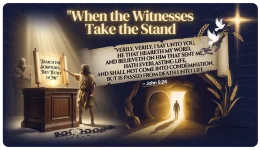
There comes a point where unbelief is no longer a lack of information. It is refusal. In John 5:24-47, Jesus does not merely make a claim, He calls witnesses to the stand, and every one of them points straight back to Him.
Jesus begins with one of the clearest promises in Scripture. He says, “Verily, verily, I say unto you, He that heareth my word, and believeth on him that sent me, hath everlasting life, and shall not come into condemnation, but is passed from death unto life” ~John 5:24. That is not religious improvement. That is not moral polishing. That is a resurrection of the soul. The person who hears Christ’s word and believes the Father who sent Him has everlasting life now, will not come into condemnation, and has already passed from death to life.
That means salvation is not earned by religious performance. It is not secured by human approval. It is received through faith in the Son whom the Father sent. Jesus is not offering people a ladder to climb; He is declaring that dead sinners must hear His voice and live. He says, “The hour is coming, and now is, when the dead shall hear the voice of the Son of God: and they that hear shall live” ~John 5:25. Spiritually dead people do not need decoration. They need life. And that life is in Christ.
Then Jesus widens the lens from spiritual resurrection to bodily resurrection. “Marvel not at this: for the hour is coming, in the which all that are in the graves shall hear his voice” ~John 5:28. Every grave has an appointment with the voice of Christ. The righteous and the wicked will both be raised, but not to the same end. Jesus says some will come forth “unto the resurrection of life,” and others “unto the resurrection of damnation” ~John 5:29. That is plain Bible truth. Death does not erase accountability. The grave does not silence God’s judgment. Every soul will stand before Christ.
But Jesus also makes clear that His judgment is not rogue judgment. He says, “I can of mine own self do nothing: as I hear, I judge: and my judgment is just” ~John 5:30. The Son is perfectly united with the Father. His judgment is righteous because He does not seek His own will apart from the Father, but the will of the Father who sent Him. This passage is not presenting Jesus as less than divine; it is showing the perfect unity of Father and Son in life, authority, judgment, and salvation.
Then the courtroom fills with witnesses. John the Baptist bore witness to the truth. The works Jesus did bore witness that the Father sent Him. The Father Himself bore witness. And the Scriptures bore witness. Jesus says, “Search the scriptures; for in them ye think ye have eternal life: and they are they which testify of me” ~John 5:39. That verse cuts deep. These men studied the Scriptures, handled the Scriptures, quoted the Scriptures, argued from the Scriptures, yet missed the One the Scriptures were pointing to.
That is a terrifying warning. A person can be religious and still reject Christ. A person can know Bible words and still refuse Bible truth. The problem was not that Scripture was unclear. The problem was their heart. Jesus says, “And ye will not come to me, that ye might have life” ~John 5:40. There it is. Not “you cannot find enough evidence.” Not “the witnesses are weak.” Not “the truth is hidden.” Jesus says the issue is willful refusal.
This is where the passage gets personal. Many people still want Scripture as a tool for self-respect, argument, identity, or religious reputation, but they do not want the Christ of Scripture ruling over them. They want Bible language without bowing to Bible authority. They want Moses, but not the One Moses wrote about. Jesus says, “For had ye believed Moses, ye would have believed me: for he wrote of me” ~John 5:46.
That means you cannot honor Scripture while rejecting Christ. You cannot claim loyalty to God’s Word while refusing the Son to whom the Word points. The whole testimony of Scripture drives us to Jesus Christ, the giver of life, the Judge of all, the One sent by the Father, the One whose voice raises the dead.
For today’s believer, this passage calls us to examine how we hear the Word. Do we come to Scripture merely to win arguments, defend preferences, or collect religious facts? Or do we come to hear Christ, believe Christ, follow Christ, and live under His authority? The Bible is not a museum of religious ideas. It is the living testimony of God pointing sinners to the Son.
And if you belong to Christ, this passage should steady your soul. You have passed from death to life. Condemnation is not waiting for you. Christ’s voice has called you out of spiritual death, and one day that same voice will call your body from the grave. The world may shake, bodies may weaken, and graves may fill, but the Son of God holds life in Himself.
The witnesses have spoken. The Scriptures testify. The Father has sent the Son. The question is not whether Christ has been clearly revealed. The question is whether we will come to Him and live. Tomorrow’s reading will press us even further: when Jesus stands before hungry people, will they only want bread, or will they see the Bread of Life?
There comes a point where unbelief is no longer a lack of information. It is refusal. In John 5:24-47, Jesus does not merely make a claim, He calls witnesses to the stand, and every one of them points straight back to Him.
Jesus begins with one of the clearest promises in Scripture. He says, “Verily, verily, I say unto you, He that heareth my word, and believeth on him that sent me, hath everlasting life, and shall not come into condemnation, but is passed from death unto life” ~John 5:24. That is not religious improvement. That is not moral polishing. That is a resurrection of the soul. The person who hears Christ’s word and believes the Father who sent Him has everlasting life now, will not come into condemnation, and has already passed from death to life.
That means salvation is not earned by religious performance. It is not secured by human approval. It is received through faith in the Son whom the Father sent. Jesus is not offering people a ladder to climb; He is declaring that dead sinners must hear His voice and live. He says, “The hour is coming, and now is, when the dead shall hear the voice of the Son of God: and they that hear shall live” ~John 5:25. Spiritually dead people do not need decoration. They need life. And that life is in Christ.
Then Jesus widens the lens from spiritual resurrection to bodily resurrection. “Marvel not at this: for the hour is coming, in the which all that are in the graves shall hear his voice” ~John 5:28. Every grave has an appointment with the voice of Christ. The righteous and the wicked will both be raised, but not to the same end. Jesus says some will come forth “unto the resurrection of life,” and others “unto the resurrection of damnation” ~John 5:29. That is plain Bible truth. Death does not erase accountability. The grave does not silence God’s judgment. Every soul will stand before Christ.
But Jesus also makes clear that His judgment is not rogue judgment. He says, “I can of mine own self do nothing: as I hear, I judge: and my judgment is just” ~John 5:30. The Son is perfectly united with the Father. His judgment is righteous because He does not seek His own will apart from the Father, but the will of the Father who sent Him. This passage is not presenting Jesus as less than divine; it is showing the perfect unity of Father and Son in life, authority, judgment, and salvation.
Then the courtroom fills with witnesses. John the Baptist bore witness to the truth. The works Jesus did bore witness that the Father sent Him. The Father Himself bore witness. And the Scriptures bore witness. Jesus says, “Search the scriptures; for in them ye think ye have eternal life: and they are they which testify of me” ~John 5:39. That verse cuts deep. These men studied the Scriptures, handled the Scriptures, quoted the Scriptures, argued from the Scriptures, yet missed the One the Scriptures were pointing to.
That is a terrifying warning. A person can be religious and still reject Christ. A person can know Bible words and still refuse Bible truth. The problem was not that Scripture was unclear. The problem was their heart. Jesus says, “And ye will not come to me, that ye might have life” ~John 5:40. There it is. Not “you cannot find enough evidence.” Not “the witnesses are weak.” Not “the truth is hidden.” Jesus says the issue is willful refusal.
This is where the passage gets personal. Many people still want Scripture as a tool for self-respect, argument, identity, or religious reputation, but they do not want the Christ of Scripture ruling over them. They want Bible language without bowing to Bible authority. They want Moses, but not the One Moses wrote about. Jesus says, “For had ye believed Moses, ye would have believed me: for he wrote of me” ~John 5:46.
That means you cannot honor Scripture while rejecting Christ. You cannot claim loyalty to God’s Word while refusing the Son to whom the Word points. The whole testimony of Scripture drives us to Jesus Christ, the giver of life, the Judge of all, the One sent by the Father, the One whose voice raises the dead.
For today’s believer, this passage calls us to examine how we hear the Word. Do we come to Scripture merely to win arguments, defend preferences, or collect religious facts? Or do we come to hear Christ, believe Christ, follow Christ, and live under His authority? The Bible is not a museum of religious ideas. It is the living testimony of God pointing sinners to the Son.
And if you belong to Christ, this passage should steady your soul. You have passed from death to life. Condemnation is not waiting for you. Christ’s voice has called you out of spiritual death, and one day that same voice will call your body from the grave. The world may shake, bodies may weaken, and graves may fill, but the Son of God holds life in Himself.
The witnesses have spoken. The Scriptures testify. The Father has sent the Son. The question is not whether Christ has been clearly revealed. The question is whether we will come to Him and live. Tomorrow’s reading will press us even further: when Jesus stands before hungry people, will they only want bread, or will they see the Bread of Life?
