


- Joined
- May 13, 2025
- Messages
- 1,353
- Reaction score
- 1,877
- Points
- 113
- Age
- 67
- Location
- Charlestown, IN
- Website
- know-the-bible.com
- Gender
- Male
- Country
- United States
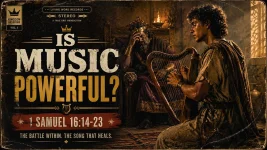
Some music does not just pass through the ears. It walks into the room, grabs the heart by the collar, and reminds you there is a war going on where eyes cannot see.
That is where 1 Samuel 16:14-23 takes us. This is not background music in a palace. This is not a soft little scene about a harp and a troubled king. This is a passage about the presence of God, the danger of rebellion, the weight of spiritual darkness, and the way God brings His chosen servant into the room before anybody understands what He is doing.
The Bible says, “But the Spirit of the LORD departed from Saul, and an evil spirit from the LORD troubled him” ~1 Samuel 16:14. That verse ought to make a man stop in his tracks. Saul still had the throne. Saul still had the crown. Saul still had servants around him. Saul still looked like the king from the outside. But inside, the lights were going out. The Spirit of the Lord had departed from him.
That is the danger of living with a title but without God’s hand. You can sit in the chair and still be empty. You can have the position and still be tormented. You can look like you are in control and still be spiritually unraveling behind closed doors.
This did not happen for no reason. In the chapter before this, Saul had rejected the Word of the Lord. Samuel told him plainly, “Because thou hast rejected the word of the LORD, he hath also rejected thee from being king” ~1 Samuel 15:23. Saul wanted God’s blessing while treating God’s command like something he could edit. He wanted to keep the crown while refusing the King above the crown.
That road always leads downhill.
When Saul is troubled, his servants suggest bringing in a skillful musician. They say, “Let our lord now command thy servants, which are before thee, to seek out a man, who is a cunning player on an harp” ~1 Samuel 16:16. They understood something was wrong, and they believed music could bring relief. And in the providence of God, that suggestion becomes the doorway that brings David into Saul’s house.
That is how God works. While Saul is breaking down, David is being brought in. While one man is losing the kingdom, another man is being prepared for it. While the palace thinks it is hiring a musician, God is placing the next king in the room. WOW.
David is described as skillful, brave, wise, and respected. But the most important thing said about him is this: “and the LORD is with him” ~1 Samuel 16:18. That is the line that separates David from Saul. Saul had the crown, but David had the Lord. Saul had the palace, but David had the presence. Saul had outward authority, but David had God’s hand on his life.
So yes, music is powerful. Scripture does not treat music like empty noise. When David played, the Bible says, “Saul was refreshed, and was well, and the evil spirit departed from him” ~1 Samuel 16:23. Music can calm the mind. It can settle the heart. It can push back heaviness for a time. God used David’s playing to bring real relief to Saul.
But hear this clearly: music can bring relief, but music cannot replace repentance.
That is where many people miss it. Saul felt better, but the passage does not say Saul turned back to God. He got relief from the torment, but there is no evidence of a humbled heart. He had a song in the room, but not submission in his soul. He wanted the pain to stop, but he did not return to the Word he had rejected.
That still happens today. A person can play worship music, listen to sermons, post Bible verses, and feel stirred for a moment, yet still refuse to obey God. A song can move your emotions without changing your direction. A melody can quiet your nerves without cleansing your sin. Music may soothe the wound, but only Christ can save the soul.
David’s harp points us beyond David. It points us to the greater Son of David, Jesus Christ. David came into Saul’s trouble with a harp in his hand. Christ came into our trouble with a cross on His back. David brought temporary relief to a tormented king. Jesus brings eternal redemption to guilty sinners.
The Bible says, “In whom we have redemption through his blood, the forgiveness of sins, according to the riches of his grace” ~Ephesians 1:7. That is what no song can do. Music cannot forgive sin. Music cannot justify the ungodly. Music cannot raise the spiritually dead. Only Jesus Christ can do that.
That does not mean music is unimportant. It means music must stay in its proper place. Music is a servant, not a savior. It can carry truth, but it is not truth itself. It can help the heart remember God’s Word, but it must never replace God’s Word.
Paul wrote, “Let the word of Christ dwell in you richly in all wisdom; teaching and admonishing one another in psalms and hymns and spiritual songs” ~Colossians 3:16. Notice what sits in the center: “the word of Christ.” Not the beat. Not the mood. Not the goosebumps. Not the performance. The Word.
That means believers need to be careful about what they let into their ears. Music is not neutral when it starts shaping what you love, excuse, crave, or believe. Some songs feed the flesh. Some songs dress rebellion up in rhythm. Some songs make sin sound normal, pride sound noble, and lust sound like love. Scripture says, “I will set no wicked thing before mine eyes” ~Psalm 101:3. The same wisdom applies to what we willingly pour into our minds.
But when music carries biblical truth, it can serve the soul well. It can help weary saints remember the Lord. It can steady the heart in suffering. It can bring Scripture to mind when the road gets dark and the battle gets loud. The power is not in the sound by itself. The power is in truth carried by sound.
That is the difference between being moved and being changed.
Saul had music in the room, but David had the Lord with him. That is the issue that cuts through all the noise. Do not settle for being emotionally refreshed while remaining spiritually unchanged. Do not use music to calm what repentance needs to confront.
A song may quiet the room, but only Christ can rule the heart.
The song came out of a season when a pastor actually took the music and instruments away from the church for a while so they would stop treating worship like a performance or a feeling.


